A Structural Automotive Part with Complex Molded Features
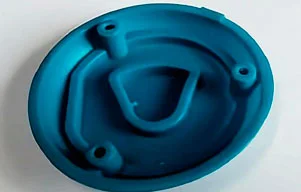
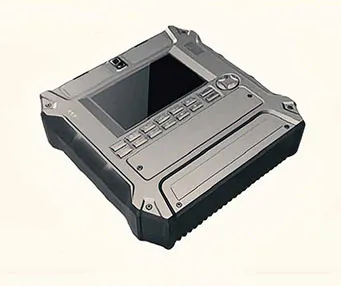
The black molded component has an irregular three-dimensional structure with reinforcing ribs, mounting bosses, open windows, stepped walls, locating points, and connection features. Several areas affect how the part fits and functions inside the final assembly, so the project required more than a visual prototype.
Glass-filled nylon was selected for its stiffness, strength, and dimensional stability. These benefits make the material suitable for structural automotive plastic parts, but they also make glass-filled nylon injection molding more demanding. Resin drying, gate location, fiber orientation, shrinkage, wall transitions, and cooling can influence warpage and final dimensions. The abrasive glass fibers must also be considered when selecting tool materials and planning tool maintenance.
The objective was to supply repeatable functional parts for installation trials and engineering tests—not simply to reproduce the external shape.
Why Prototype Injection Molding Instead of CNC Machining?
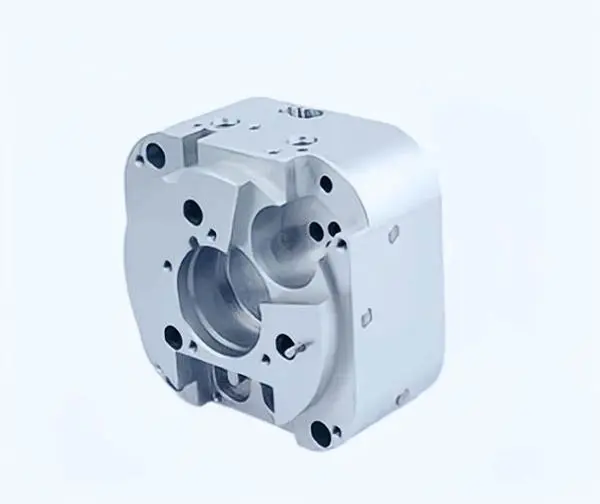
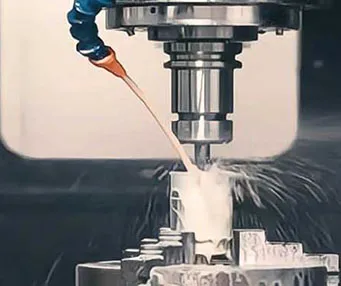
CNC machining is useful for early concept verification when only a few plastic prototypes are required. For repeated batches of around 100 complex parts, however, machining time and unit cost increase quickly. Thin walls, deep pockets, ribs, bosses, and internal details may require multiple CNC setups, while a machined part does not fully reproduce injection-molding behavior.
Prototype injection molding, sometimes called rapid prototype injection molding, uses a simplified mold to produce real injection-molded parts before the customer invests in long-life production tooling. For this project, it provided several practical advantages:
Lower unit cost for approximately 100 parts and later repeat orders
Functional samples produced in the specified glass-filled nylon
Molded ribs, bosses, wall transitions, gate marks, and shrinkage behavior available for evaluation
Enough parts for assembly trials, functional tests, and internal engineering reviews
The possibility of correcting selected tool dimensions after sample feedback
For an R&D team that has moved beyond one-off prototypes but is not ready for a high-volume mold, this approach provides a controlled step between CNC prototypes and production tooling.
Rapid Tooling Designed Around the Validation Quantity
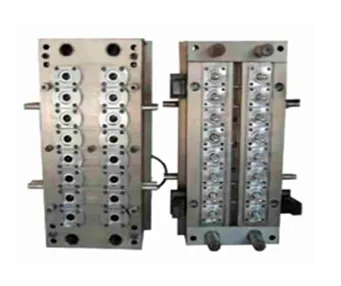
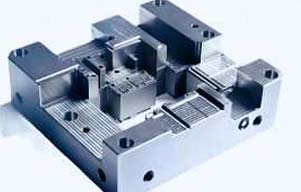
Our rapid tooling service is based on the actual testing requirement, resin, part geometry, and expected number of molding cycles. The prototype tooling for this component did not require the full automation of a mass-production mold.
Some mold actions were operated manually. Manual inserts, loose cores, or manually assisted demolding can be practical when a part contains undercuts or features that cannot release in the main opening direction. For batches of approximately 100 parts, this tooling strategy can reduce mold complexity and initial investment without removing the features required for testing.
This does not mean that every simplified mold should use the same structure. Before cutting the tool, our engineers review the component and decide whether manual actions, sliders, lifters, interchangeable inserts, or another solution is appropriate.
Injection Molding DFM Before Tool Manufacturing
A clear injection molding DFM review helps reduce changes after the mold has been manufactured. For a glass-filled nylon automotive part, the review focuses on:
Parting-line and gate locations
Draft angles and ejection direction
Undercuts and required mold actions
Wall-thickness transitions, ribs, bosses, and sink risk
Material flow, weld-line locations, and venting
Fiber orientation, uneven shrinkage, and warpage risk
Critical assembly dimensions and datum relationships
Expected tool life and likely repeat batches
The DFM does not treat every dimension as equally important. We ask the customer to identify critical-to-function features on the 2D drawing so the tooling, sampling, and inspection plan can focus on fit and test performance.
T1 Samples and Mold Trial Evaluation
After rapid injection tooling is completed, the mold is installed for the first trial. The resulting T1 samples are reviewed for filling, flash, weld lines, ejection, deformation, and visible defects. Key dimensions are checked against the drawing, and available mating parts can be used for fit verification.
For glass-filled nylon, molding parameters must be established carefully. Material drying, melt and mold temperature, injection speed, holding pressure, and cooling time all influence part quality. Fiber alignment can create different shrinkage in different directions, especially around long walls, narrow ribs, and asymmetric sections.
When trial results reveal an issue, the response may involve process adjustment, improved venting, local tool correction, or an agreed dimensional change. The next samples are then used to verify the correction before the required batch is molded.
Low-Volume and Short-Run Injection Molding
The completed prototype mold can be reused after the initial validation round. This allows the customer to order another batch without paying to CNC machine every part again. It is particularly useful when different engineering teams need samples at different stages or when testing generates a second round of demand.
This type of low-volume injection molding is also described as short-run injection molding. Where appropriate, the same tool may support pilot production or serve as bridge tooling while a long-life production mold is being prepared. The suitable role of the tool depends on its construction, material, part resin, maintenance condition, and required number of cycles.
Rapid Injection Molding Services from YS Rapid
YS Rapid provides rapid injection molding for product developers who need production-intent plastic parts without immediately investing in a fully automated high-volume mold. Our support can include CAD and drawing review, injection molding DFM, rapid tool manufacturing, mold trials, T1 sample inspection, tool corrections, low-volume molding, and repeat batch production.
Our prototype tooling and rapid injection molding services are suitable for:
Automotive injection molding prototypes
Functional plastic prototypes in engineering-grade resins
Design validation and assembly testing
Pilot builds and pre-production plastic parts
Short-run or low-volume injection molding
Bridge production before mass-production tooling is ready
Projects moving from CNC plastic prototypes to molded parts
Request a Prototype Injection Molding Quote
If the required quantity makes CNC machining too expensive, rapid tooling may offer a better technical and commercial route. Send YS Rapid your 3D CAD file, 2D drawing, material grade, required quantity, critical dimensions, mating-part information, and testing schedule.
Our engineers will review the part and recommend a suitable prototype injection mold, manual or automatic mold actions, inspection plan, and repeat-production approach. Contact us for a rapid injection molding quote for glass-filled nylon automotive parts or other functional engineering components.
 EN
 jp
 ko
 fr
 de
 es
 it
 pt
 tr
 ar
 iw