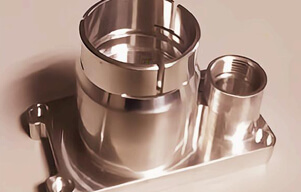
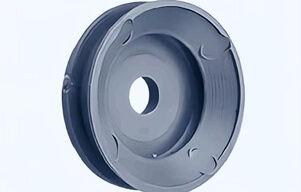
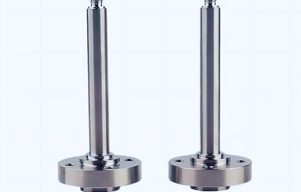
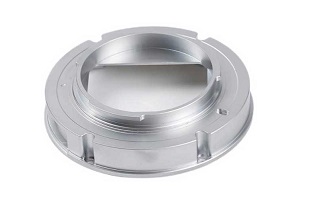
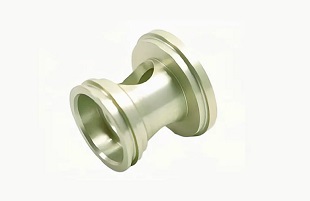
Medical device components are often small, but the engineering decisions behind them are rarely simple. A machined housing, surgical instrument component, diagnostic equipment fitting, or implant-related part may need to meet demanding requirements for dimensional accuracy, surface condition, material traceability, cleanliness, and repeatable production. A component that looks correct on a drawing can still create problems during assembly, sterilization, inspection, or long-term use if its material and manufacturing process are not properly selected.
Medical precision machining is the process of producing medical-related components through controlled material-removal operations, such as CNC milling, CNC turning, drilling, boring, and multi-axis machining. The process is used when a component requires defined geometry, dimensional control, material-specific performance, or a level of design flexibility that is difficult to achieve through other manufacturing methods.
However, choosing a machining process is only one part of the sourcing decision. Buyers and product engineers also need to consider the intended application, material grade, drawing requirements, production quantity, inspection plan, surface finishing, and the manufacturing partner's ability to communicate technical risks before production begins.
This guide explains how to approach medical precision machining from an engineering and procurement perspective. It covers material selection, machining methods, tolerance planning, surface requirements, quality documentation, supplier evaluation, and the information that should be included in a request for quotation. The objective is to help engineering teams make more informed manufacturing decisions while reducing avoidable design changes, quotation delays, and production risks.
1. What Is Medical Precision Machining?
Medical precision machining is the controlled production of components used in medical devices, diagnostic equipment, laboratory systems, surgical instruments, and other healthcare-related products, where material properties, dimensional requirements, and manufacturing consistency must match the component's intended function.
Unlike general-purpose machining projects, medical-related component manufacturing can involve additional considerations such as biocompatibility requirements, sterilization compatibility, surface condition, material traceability, and documentation. The exact requirements depend on the device classification, component function, intended contact with the human body, and the regulatory responsibilities of the finished-device manufacturer.
It is important to distinguish between a medical device and a machined component supplied to a medical device manufacturer. A company machining a metal bracket, equipment housing, instrument component, or custom fitting does not automatically assume the same regulatory responsibilities as the manufacturer placing a finished medical device on the market. Responsibilities should be defined by the product, contractual relationship, applicable regulations, and the role each organization performs in the supply chain.
Typical Applications of Medical CNC Machining
Medical CNC machining can support a wide range of component categories. Common examples include:
Surgical instrument components: Handles, instrument bodies, precision fittings, adapters, and structural components that require controlled geometry and reliable assembly.
Diagnostic equipment parts: Housings, brackets, sensor mounts, alignment components, and mechanical structures used in diagnostic or laboratory equipment.
Medical device enclosures: Aluminum or stainless steel housings that protect internal electronic, optical, or mechanical assemblies.
Fluid-handling components: Connectors, manifolds, fittings, and machined passages used in equipment where fluid compatibility and cleanability are important.
Prototype and development parts: Early-stage components used to evaluate mechanical fit, ergonomics, assembly, and functional performance before production decisions are finalized.
Custom precision components: Low-volume or specialized parts that are not practical to source as standard catalog products.
The appropriate manufacturing route depends on the component's actual function. A non-contact equipment bracket may primarily require dimensional accuracy and mechanical strength. A component that contacts tissue or carries a fluid may require additional material, surface, cleaning, and validation considerations. Therefore, the term medical machining should not be treated as a single universal specification.

2. Medical CNC Machining Requirements Start With the Application
The most reliable medical machining specification begins with the component's intended application, because the application determines which material, dimensional, surface, cleanliness, and documentation requirements are technically relevant.
Before selecting a machining process or requesting a quotation, engineers should establish what the component does, where it is installed, what it contacts, and what conditions it must withstand. This prevents a common sourcing problem: selecting a material or tolerance based on a general description rather than the component's actual operating environment.
Define the Component's Functional Role
Start by classifying the part according to its function. Is it a structural support, an enclosure, a moving mechanism, a fluid connector, a positioning component, or part of a surgical instrument? Each category creates different manufacturing priorities.
For example, an equipment housing may require good machinability, stable dimensions, corrosion resistance, and an attractive surface finish. A precision positioning component may place greater emphasis on datum relationships, flatness, perpendicularity, and repeatable assembly. A fluid-handling part may require special attention to internal passage geometry, burr removal, surface condition, and cleaning procedures.
Identify the Operating Environment
The operating environment can influence material and process selection as much as the geometry itself. Engineers should identify whether the part will be exposed to moisture, cleaning chemicals, disinfectants, repeated sterilization cycles, temperature changes, vibration, mechanical loading, or contact with specific fluids.
Do not assume that a material is suitable simply because it is commonly used in medical equipment. A grade that performs well in one application may be unsuitable in another because of corrosion conditions, wear, chemical exposure, or biological-contact requirements.
Separate Essential Requirements From Preferred Features
Not every feature on a component drawing has the same functional importance. Critical dimensions should be identified separately from general dimensions, cosmetic requirements, and preferred manufacturing details.
Critical-to-function dimensions: Features that directly affect fit, movement, sealing, alignment, or device performance.
General dimensions: Features that can follow an agreed general tolerance unless the drawing specifies otherwise.
Surface requirements: Roughness, appearance, coating, polishing, or other conditions required by the application.
Documentation requirements: Material certificates, inspection reports, process records, or other documents required by the buyer.
This classification helps the manufacturing partner focus inspection and process planning on the features that matter most. It can also prevent unnecessary cost caused by applying extremely tight tolerances to dimensions that do not affect the component's function.
3. Selecting Materials for Medical Precision Machining
Material selection for medical precision machining is the process of matching a material's mechanical, chemical, thermal, and biological-contact characteristics to the component's intended operating conditions and manufacturing requirements.
There is no universally best material for medical components. Stainless steel, aluminum alloys, titanium alloys, engineering plastics, and other materials can all be appropriate in different situations. The correct choice depends on the design, loading conditions, environment, sterilization method, regulatory requirements, and the finished-device manufacturer's specifications.
Stainless Steel
Stainless steel is widely used in medical equipment and precision components because many grades offer a useful combination of strength, corrosion resistance, durability, and machinability. Different grades have different chemical compositions and performance characteristics, so the exact grade must be specified rather than simply requesting stainless steel.
For machined components, engineers should consider the selected grade's corrosion behavior, hardness, strength, work-hardening tendency, and compatibility with the intended cleaning or sterilization environment. The surface condition after machining may also matter, particularly where crevices, burrs, or retained machining residues could create functional or cleaning problems.
Titanium and Titanium Alloys
Titanium alloys are considered when a design requires a high strength-to-weight ratio, corrosion resistance, or material characteristics suitable for a defined medical application. Their use can be attractive for specialized components, but titanium machining requires careful control of cutting conditions, tool wear, heat generation, and chip evacuation.
Engineers should avoid treating all titanium grades as interchangeable. The selected grade, material condition, product form, and applicable specification must match the design requirements. If the component is intended for direct or indirect body contact, the finished-device manufacturer should define the relevant material and validation requirements.
Aluminum Alloys
Aluminum alloys are often used for medical equipment housings, structural frames, instrument supports, brackets, and other components where low weight, machinability, and corrosion performance are important. Their suitability depends on the alloy, temper, surface treatment, and operating environment.
Aluminum should not automatically be selected for components that require direct biological contact. The material and any coating or finishing process must be evaluated against the intended application. For equipment structures and housings, however, aluminum can provide an efficient balance between weight, rigidity, and manufacturing flexibility.
Engineering Plastics
Engineering plastics may be selected when electrical insulation, low weight, chemical resistance, low friction, or specific dimensional and functional characteristics are required. Different polymers behave differently under temperature, load, moisture, and chemical exposure.
For example, a polymer that is suitable for a laboratory equipment housing may not be suitable for a component exposed to repeated high-temperature sterilization. Plastic grades can also differ in moisture absorption, creep, thermal expansion, and machining behavior. The exact grade and its supplier documentation should therefore be confirmed before production.
| Material family | Potential advantages | Important considerations | Typical component direction |
|---|
| Stainless steel | Strength, durability, corrosion resistance in suitable grades | Grade selection, work hardening, surface condition, machining time | Instrument parts, fittings, structural components |
| Titanium alloys | High strength-to-weight ratio and corrosion resistance in suitable applications | Machining heat, tool wear, material grade, application validation | Specialized precision components and selected medical applications |
| Aluminum alloys | Low weight, good machinability, useful strength in suitable tempers | Surface protection, alloy and temper, contact requirements | Equipment housings, frames, brackets, supports |
| Engineering plastics | Low weight, insulation, chemical or friction-related advantages depending on grade | Temperature, creep, moisture absorption, chemical compatibility | Insulating parts, guides, housings, selected functional components |
Material selection should be documented in the engineering drawing or purchasing specification. Where a particular grade is essential, the drawing should identify the applicable standard and material condition. Where alternatives are acceptable, the buyer should define the performance criteria that an alternative must meet.
4. Choosing the Right Medical CNC Machining Process
The right medical CNC machining process is the manufacturing method that can produce the required geometry, dimensional relationships, surface condition, and repeatability at an appropriate cost and production volume.
Different machining operations solve different geometry and production challenges. A complex part may require several operations, multiple setups, or a combination of milling and turning. The manufacturing plan should be based on the drawing and functional requirements rather than on the assumption that one machine or process can produce every feature in a single operation.
CNC Milling
CNC milling removes material using rotating cutting tools while the workpiece or machine axes move according to a programmed tool path. It is suitable for flat surfaces, pockets, slots, holes, contours, and many complex three-dimensional features.
For medical equipment components, milling may be used to produce housings, brackets, structural parts, and custom instrument bodies. The number of setups, tool access, workholding method, and datum strategy all influence dimensional consistency and cost.
CNC Turning
CNC turning is used primarily for parts with rotational geometry. The workpiece rotates while a cutting tool removes material to create diameters, shoulders, grooves, threads, and other cylindrical features.
Turning can be efficient for shafts, pins, bushings, threaded fittings, and other round components. If a turned part also includes milled flats, cross-holes, or non-rotational features, a mill-turn or secondary machining operation may be considered.
Multi-Axis Machining
Multi-axis machining allows a cutting tool or workpiece to approach multiple surfaces and orientations, which can reduce repeated repositioning for certain complex components. It may be useful when a part includes angled surfaces, compound geometry, or features that are difficult to access with conventional three-axis setups.
However, more machine axes do not automatically guarantee better accuracy or lower cost. The benefit depends on part geometry, fixture design, tool reach, machine capability, and the number of operations that can realistically be consolidated.
Drilling, Boring, and Threading
Drilling creates holes, boring improves or enlarges existing holes, and threading produces internal or external screw features. These operations are important when a component must connect to other parts, carry fasteners, or provide accurately located passages.
Hole position, perpendicularity, diameter, depth, thread specification, and burr condition should be defined according to function. For deep or intersecting holes, engineers should consider tool access, chip evacuation, and inspection feasibility during the design stage.
5. Tolerances, GD&T, and Dimensional Control
Tolerance planning is the process of defining acceptable dimensional variation so that a machined component performs its intended function and assembles correctly with related parts.
Precision does not mean making every dimension as tight as possible. Tight tolerances can increase machining time, inspection effort, scrap risk, and quotation cost. The most effective drawing communicates which dimensions are critical and why they matter.
Use Functional Tolerances
Engineers should identify the dimensions that control fit, movement, sealing, alignment, and assembly. These dimensions may require tighter control than non-functional external surfaces or cosmetic features.
For example, a shaft diameter that determines bearing fit may need a more specific tolerance than an external cover dimension. A mounting hole pattern may require positional control because it determines alignment with another assembly. Applying the same tolerance to both features would not necessarily improve product performance.
Use GD&T to Explain Relationships
Geometric Dimensioning and Tolerancing (GD&T) communicates permissible variation in form, orientation, location, and runout. It helps define how features relate to functional datums, which can be more useful than relying only on independent plus-or-minus dimensions.
When using GD&T, drawings should establish clear datums and avoid ambiguous inspection instructions. The datum reference frame should reflect how the part is located or assembled in its real application wherever practical.
Confirm Tolerance Capability With the Supplier
Do not assume that a universal machining tolerance applies to every feature, material, size, or manufacturing condition. Achievable tolerance depends on machine condition, tooling, workholding, part geometry, material behavior, thermal effects, measurement equipment, and inspection method.
A supplier should review critical dimensions before quotation and identify any features that may require special fixtures, additional setups, or dedicated inspection. If the drawing contains an unusually tight tolerance, the buyer should confirm that it is functionally necessary and that the inspection method can verify it.
6. Surface Finish, Burr Removal, and Cleanliness
Surface finishing and post-machining control are the processes used to achieve the required surface condition, remove unwanted material features, and prepare a component for its next manufacturing or assembly stage.
For medical-related components, surface requirements should be defined according to function. A cosmetic equipment cover, a sliding mechanical feature, and a fluid-contact component may need very different surface conditions. A general instruction such as smooth finish is not sufficiently precise for a controlled manufacturing process.
Surface Roughness
Surface roughness can affect friction, wear, sealing, cleanability, appearance, and the performance of mating components. If roughness is functionally important, the drawing should specify the required parameter and measurement direction or method where necessary.
Engineers should also consider whether the specified surface finish is realistic for the selected material and geometry. Deep pockets, narrow slots, internal passages, and complex contours may be more difficult to finish or inspect than accessible external surfaces.
Deburring and Edge Control
Machining can leave burrs at hole exits, intersections, slots, and sharp edges. Burr removal is important when loose material could interfere with assembly, damage a mating part, affect fluid flow, or create a handling hazard.
Drawings should define edge breaks, radii, or deburring requirements when these features are functionally important. For complex internal geometries, the buyer and supplier should discuss how burr removal and verification will be performed.
Coatings and Surface Treatments
Depending on the material and application, a component may require passivation, anodizing, polishing, coating, or another surface treatment. These processes can affect corrosion performance, appearance, dimensions, friction, and compatibility with the operating environment.
Surface treatment should be considered during tolerance planning. A coating adds or changes material at the surface, and the resulting dimensions may affect fits, threads, holes, and mating features. The drawing should identify which dimensions apply before or after finishing.
7. Quality Control and Documentation for Medical Machined Parts
Quality control for medical machined parts is the planned verification of material, dimensions, surface condition, and production requirements against approved drawings and specifications.
The inspection plan should be proportionate to the component's risk and contractual requirements. A simple equipment bracket may require a different level of documentation from a critical component used in a regulated medical device. Buyers should define the required records before production rather than requesting unspecified documents after the parts have been completed.
First Article Inspection
First article inspection evaluates an initial production part against the drawing and agreed specifications. It can help identify drawing interpretation issues, setup errors, missing dimensions, or process limitations before a larger batch is produced.
For a new or revised component, buyers may request a dimensional report that records measured values for selected or all drawing characteristics. The inspection scope should be agreed in advance, including the measurement method and acceptance criteria.
Material Verification and Traceability
Material verification confirms that the material supplied and used in production matches the specified grade and condition. Depending on the project, the buyer may require a material certificate, heat or lot identification, supplier documentation, or a defined traceability procedure.
Traceability requirements should be clearly stated in the purchase order or quality agreement. The required level of traceability depends on the component, the finished-device manufacturer's quality system, and applicable contractual or regulatory obligations.
Measurement Equipment and Inspection Method
Common inspection tools include calipers, micrometers, height gauges, bore gauges, thread gauges, surface roughness testers, and coordinate measuring machines. The appropriate equipment depends on the feature being measured and the required accuracy.
For complex geometry or tightly controlled positional relationships, a coordinate measuring machine may be useful. However, the inspection method must be appropriate for the drawing requirement, and measurement results should be interpreted in the context of instrument capability and measurement uncertainty.
Understand the Role of ISO 13485 and FDA QMSR
ISO 13485 is an internationally recognized quality management system standard for organizations involved in medical devices and related services. It provides a framework for quality management processes, but a supplier's certification status should be verified directly and should not be assumed from its website or marketing language.
In the United States, the FDA Quality Management System Regulation (QMSR) became effective on February 2, 2026, and incorporates by reference ISO 13485:2016, subject to the regulation's requirements and FDA-specific provisions. The regulation applies to manufacturers of finished medical devices intended for commercial distribution in the United States. A contract machining supplier should not automatically be described as subject to identical obligations without assessing its role and applicable requirements.
For buyers, the practical lesson is to clarify which quality requirements apply to the finished device, which requirements are flowed down to component suppliers, and what evidence the supplier must provide. Do not treat a standard or certification as a substitute for a project-specific quality agreement.
8. How to Evaluate a Medical CNC Machining Supplier
A suitable medical CNC machining supplier is a manufacturing partner that can understand the component's application, review its technical requirements, communicate process risks, and consistently deliver parts that meet the agreed specifications.
Price is important, but it should not be the only selection criterion. A low initial quotation may become expensive if the supplier misunderstands the drawing, cannot inspect critical features, uses an unsuitable material, or communicates production problems too late.
Evaluate Engineering Review Capability
Ask whether the supplier reviews drawings before quotation and can identify manufacturability issues. A useful engineering review may cover tool access, wall thickness, internal radii, datum strategy, tolerance feasibility, workholding, and finishing requirements.
The supplier should be able to explain why a design feature may increase cost or production risk. Generic statements such as we can make any precision part do not provide enough evidence of technical capability.
Review Relevant Equipment and Process Experience
Ask which machining processes are available and which are performed internally or through qualified subcontractors. If the component requires multi-axis machining, turning, specialized finishing, or inspection equipment, confirm that the proposed production route can support the drawing.
Equipment lists alone are not proof of process capability. Buyers should also review representative component experience, inspection methods, sample reports, and the supplier's ability to manage revisions and repeat orders.
Assess Communication and Change Control
Engineering projects often change after prototype evaluation. A reliable supplier should have a clear method for handling revised drawings, material substitutions, process changes, nonconforming parts, and approval requirements.
Before production, confirm which drawing revision is being quoted and manufactured. Any deviation from the approved specification should be documented and approved by the buyer before implementation.
Compare Suppliers Using a Consistent Framework
| Evaluation factor | Questions to ask | Why it matters |
|---|
| Engineering review | Does the supplier identify manufacturability and tolerance risks? | Reduces avoidable design and quotation problems. |
| Material control | Can the supplier confirm the specified grade and provide agreed records? | Helps prevent material substitution and traceability gaps. |
| Machining capability | Can the proposed process produce the required geometry? | Connects equipment and process selection to the actual drawing. |
| Inspection | Can critical dimensions be measured and reported? | Provides evidence that parts meet agreed requirements. |
| Finishing | Can the supplier meet the required surface and edge conditions? | Supports assembly, function, and downstream processing. |
| Communication | Are revisions, deviations, and production risks communicated clearly? | Reduces delays and uncontrolled changes. |
| Commercial terms | Are tooling, setup, inspection, finishing, packaging, and shipping included? | Improves quotation comparability and total-cost visibility. |
For buyers comparing CNC machining service providers, the most useful approach is to send the same drawing package and requirements to each supplier. This makes it easier to compare process assumptions, inspection scope, lead time, and total quotation cost rather than comparing headline unit prices alone.
9. From Prototype to Production: Planning the Manufacturing Route
A successful transition from prototype to production is the process of confirming that the approved design, material, machining route, inspection plan, and supply arrangements can be repeated at the required quantity and quality level.
Prototype parts are useful for evaluating geometry, fit, appearance, and selected functional characteristics. However, a prototype made with a different material, machine setup, finishing route, or inspection method may not fully represent the final production process.
Prototype Stage
During prototype development, the priority is often to obtain parts quickly enough to evaluate the design. CNC machining is useful because it can produce functional parts directly from solid material without requiring a dedicated injection mold or die-casting tool.
At this stage, buyers should identify which dimensions are provisional and which are already controlled. If the prototype is intended for functional testing, the material and manufacturing process should be selected to represent the expected production conditions as closely as practical.
For projects that are still validating geometry or assembly, a suitable rapid prototyping route can help teams assess design decisions before committing to production tooling or a finalized manufacturing plan.
Design Validation and Engineering Changes
After prototype evaluation, engineering teams may revise dimensions, material, surface finish, or assembly interfaces. Every revision should be controlled so that the supplier does not manufacture parts against an outdated drawing.
It is useful to maintain a revision history that records the reason for each change, the affected features, and the approval status. When a change affects a critical dimension or material, the inspection plan may also need to be updated.
Production Readiness
Before releasing a production order, confirm the approved drawing revision, material specification, quantity, inspection requirements, finishing route, packaging method, and delivery schedule. If the project requires first article approval, define whether production can continue before the report is accepted.
For repeat orders, buyers should also discuss how process changes, supplier changes, or material substitutions will be communicated. Consistency is not achieved simply by reusing the same drawing; it also depends on maintaining the agreed production and quality controls.
10. What Information Should Be Included in a Medical Machining RFQ?
A complete medical machining request for quotation (RFQ) is a technical and commercial package that gives the supplier enough information to evaluate manufacturability, estimate cost, define inspection requirements, and propose a realistic delivery schedule.
Incomplete RFQs often lead to repeated clarification emails and quotations based on different assumptions. A structured RFQ helps both sides understand the project before production begins.
Recommended RFQ Checklist
2D engineering drawing: Include dimensions, tolerances, GD&T, datums, threads, edge conditions, and surface requirements.
3D CAD model: Provide a suitable neutral format where available, such as STEP, along with the controlled drawing revision.
Material specification: Identify the exact alloy or polymer grade, temper or condition, and applicable material standard.
Quantity: State prototype quantity, initial production quantity, and expected repeat-order volume if known.
Critical features: Identify dimensions and characteristics that directly affect function, assembly, safety, or validation.
Surface treatment: Specify polishing, passivation, anodizing, coating, or other required processes.
Inspection requirements: Define first article inspection, dimensional reports, material certificates, and other required records.
Application information: Explain the component's function and relevant operating environment, while sharing only the technical information necessary for quotation.
Packaging requirements: State any requirements for protection against scratches, contamination, corrosion, or handling damage.
Delivery requirements: Include the required delivery date, destination, shipping terms, and any staged delivery expectations.
Questions to Resolve Before Approving the Quotation
Before placing an order, ask the supplier to confirm the manufacturing process, material source or documentation, critical tolerance assumptions, finishing responsibility, inspection scope, and any excluded costs. If a feature cannot be produced exactly as drawn, request a written explanation and an approved alternative rather than allowing an undocumented change.
YS Rapid can be considered as a manufacturing contact point for projects requiring CNC machining and related rapid manufacturing services. Buyers should share the actual drawings and project requirements so that the appropriate process, capability, and documentation can be evaluated for the specific component. Any certification, tolerance, material, or inspection claim should be confirmed against the supplier's current and project-specific evidence before it is included in a purchase specification.
Frequently Asked Questions About Medical Precision Machining
1. What is the difference between medical machining and general CNC machining?
Medical machining uses CNC manufacturing processes to produce components for medical devices, diagnostic equipment, surgical instruments, and healthcare-related systems. The machining operations may be similar to general CNC machining, but the project can involve additional requirements for material specification, surface condition, traceability, inspection, cleanliness, and documentation. The exact requirements depend on the component's intended use and the finished-device manufacturer's specifications.
2. Which materials are commonly used for medical CNC machining?
Common material families include stainless steel, titanium alloys, aluminum alloys, and engineering plastics. The correct material depends on mechanical loading, corrosion exposure, weight, temperature, chemical compatibility, sterilization conditions, and biological-contact requirements. Buyers should specify the exact grade and material condition instead of relying on a broad material-family description.
3. Does every medical machined component need ISO 13485 certification?
No. ISO 13485 is a medical-device quality management system standard, but whether a particular organization or supplier must hold certification depends on its role, applicable requirements, customer contracts, and regulatory context. Buyers should distinguish between the quality obligations of a finished-device manufacturer and the requirements flowed down to a component supplier. Certification should always be verified directly.
4. What tolerances can a medical CNC machining supplier achieve?
There is no single tolerance that applies to every medical machined component. Achievable tolerances depend on material, geometry, feature size, machine condition, tooling, workholding, thermal effects, and inspection method. The buyer should identify critical dimensions on the drawing and ask the supplier to review feasibility before production. Tight tolerances should be used where they are functionally necessary.
5. Is CNC machining suitable for medical device prototypes?
Yes. CNC machining can produce functional prototypes from engineering metals and plastics without requiring dedicated production molds. It is useful for evaluating fit, assembly, mechanical behavior, and selected design characteristics. However, prototype material and processing conditions should be chosen carefully if the results will be used to predict production performance.
6. What should I send when requesting a medical CNC machining quotation?
Provide a controlled 2D drawing, 3D CAD model where available, exact material specification, required quantity, critical dimensions, surface finish, inspection and documentation requirements, packaging instructions, and delivery destination. Also explain the component's function and operating environment when that information affects material or process selection. A complete RFQ helps the supplier provide a more accurate and technically useful quotation.
Conclusion: Make Medical Machining Decisions Around Function, Evidence, and Repeatability
Medical precision machining is not simply a matter of producing a component to a drawing. Successful sourcing requires a clear understanding of the component's intended function, material requirements, manufacturing route, tolerance strategy, surface condition, inspection plan, and documentation expectations.
Engineers can reduce manufacturing risk by defining critical features early, selecting materials based on the real operating environment, and discussing manufacturability before releasing production drawings. Buyers can improve supplier comparisons by evaluating engineering review, process capability, material control, inspection, finishing, communication, and total quotation scope together.
For medical device developers and equipment manufacturers, the most effective manufacturing partner is not necessarily the supplier offering the lowest unit price. It is the partner that can understand the technical requirements, identify risks early, communicate clearly, and deliver components against an agreed and verifiable specification.
YS Rapid supports manufacturing discussions for CNC machining and rapid manufacturing projects. If you are evaluating a medical-related component, prepare the drawing, material requirements, target quantity, and inspection expectations before requesting a quotation. This gives the manufacturing team a clearer basis for assessing the project and recommending an appropriate production route.
External References and Further Reading
 EN
 jp
 ko
 fr
 de
 es
 it
 pt
 tr
 ar
 iw