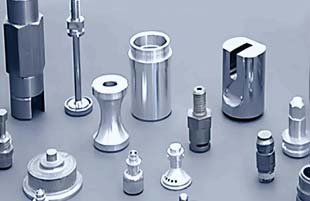
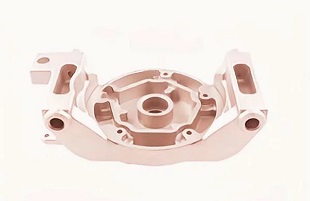
Choosing between zinc die casting and CNC machining is not simply a choice between two ways to manufacture metal parts. It is a decision about how a component will be designed, how production costs will be distributed, how much design flexibility is needed, and how consistently the required geometry can be produced at the target volume.
Zinc die casting uses molten zinc alloy injected under pressure into a reusable metal die. CNC machining removes material from a solid workpiece using computer-controlled cutting tools. Both processes can produce precision metal components, but they solve different manufacturing problems.
For a low-volume prototype with frequent design changes, CNC machining may offer a practical route because it does not require a dedicated die. For a stable design with recurring high-volume demand, zinc die casting may become attractive because the tooling investment can be spread across many parts and the process can produce complex shapes efficiently. Neither statement is universal: part geometry, alloy, tooling complexity, machining allowance, finishing, inspection, and production planning all affect the final decision.
This guide compares zinc die casting and CNC machining from the perspective of product engineers, sourcing teams, and manufacturing buyers. It explains the cost structure of each process, the effect of production volume, the design features each process handles well, and the questions that should be answered before selecting a manufacturing route.
1. Zinc Die Casting vs. CNC Machining: What Is the Fundamental Difference?
Zinc die casting forms a metal component by injecting molten zinc alloy into a reusable steel die, while CNC machining creates a component by removing material from a solid workpiece through programmed cutting operations.
The most important difference is how the part's geometry is created. Die casting forms much of the component's shape during the casting cycle. CNC machining creates geometry through a sequence of tool movements, cutting operations, and workholding setups.
How Zinc Die Casting Works
In zinc die casting, zinc alloy is melted and injected into a metal die under pressure. The molten metal fills the cavity, solidifies, and is ejected as a casting. The die is then prepared for the next cycle.
The die contains the negative geometry of the component, including features such as ribs, bosses, openings, and other details that can be formed during casting. The design of the die, gating system, vents, cooling arrangement, and ejection system influences the final casting quality and production efficiency.
Because the die is reused, the initial tooling investment is an important part of the economics. Once the tooling is ready and the process is stable, repeated production can distribute that initial cost across a larger number of components.
How CNC Machining Works
CNC machining begins with a solid workpiece, such as a metal bar, plate, billet, or casting blank. A computer-controlled machine follows programmed tool paths to remove material and create the required features.
Depending on the component, machining may involve milling, turning, drilling, boring, tapping, or multi-axis operations. A part may require one setup or several setups to reach all surfaces and features.
CNC machining generally avoids the need for a dedicated die, making it suitable for prototypes, custom parts, and production runs where tooling investment is difficult to justify. However, material removal, setup time, tool changes, and inspection can make each part more expensive as production volume increases.
The Decision Is About the Whole Manufacturing Route
A fair comparison must include more than the basic process. A zinc die-cast component may require trimming, machining of selected features, deburring, surface finishing, and inspection. A CNC-machined component may require raw-material preparation, multiple setups, finishing, and dimensional verification.
When comparing quotations, buyers should compare finished, accepted parts rather than comparing a die-casting cycle with a CNC machine cycle. The manufacturing route should include every operation needed to deliver the component in the specified condition.
2. Production Volume: When Does Each Process Make Sense?
Production volume affects the choice between zinc die casting and CNC machining because die casting requires upfront tooling investment, while CNC machining generally distributes more of its cost across individual machining operations.
There is no universal break-even quantity. The point at which one process becomes more economical depends on die complexity, tooling life, part size, machining time, material utilization, finishing requirements, inspection, and the number of design revisions expected.
Low-Volume Production
For low-volume projects, CNC machining can be attractive because the buyer can avoid a dedicated die and begin manufacturing after the drawing and machining program are ready. This is particularly useful when the product is still being evaluated or when the geometry may change after testing.
However, CNC machining is not automatically the lowest-cost option for every small batch. A simple zinc die-cast part may still be commercially viable if suitable tooling already exists or if the project can use an established die. Conversely, a complex machined part may require substantial programming, setup, and inspection even for a small quantity.
Medium-Volume Production
Medium-volume projects require a more detailed cost model. At this stage, tooling investment may begin to be justified, but the buyer should consider the expected lifetime volume rather than only the first purchase order.
If demand is uncertain, CNC machining may reduce the risk of investing in tooling before the product is commercially proven. If demand is stable and the component geometry is well established, die casting may offer a route toward lower recurring manufacturing cost.
High-Volume Production
For high-volume production, zinc die casting can be attractive because the die is reused across many cycles and the process can form multiple geometric features in one casting operation. This can reduce the amount of material that must be removed later and limit the need for extensive machining.
Nevertheless, the tooling cost, maintenance, expected die life, process yield, finishing, and inspection must all be included in the business case. If the casting requires extensive secondary machining or has a complex die design, the expected savings may be smaller than initially assumed.
| Decision factor | Zinc die casting | CNC machining |
|---|
| Initial tooling | Requires a dedicated die for a new part unless suitable tooling already exists | Usually avoids dedicated forming dies; fixtures may still be required |
| Recurring production cost | Can become attractive when tooling cost is spread across sufficient volume | Often has a larger machining-time component per part |
| Design changes | Die changes can add cost and lead time | CAD, CAM, and machining-program changes may be more straightforward |
| Typical project direction | Stable geometry and repeat production | Prototypes, custom parts, low-volume and revised designs |
| Cost uncertainty | Tooling design and process validation can affect upfront investment | Cycle time, setup, material removal, and inspection affect unit cost |
3. Cost Comparison: Tooling, Unit Price, and Total Cost
The total cost of a manufactured component is the combined cost of tooling, raw material, production operations, secondary processing, inspection, scrap, packaging, logistics, and any other activities required to deliver accepted parts.
Buyers should avoid choosing a process based only on the quoted unit price. A die-cast quotation may separate tooling from piece price, while a CNC quotation may include programming and setup in the first batch. The quotation structures can therefore look very different even when they represent similar total project costs.
Tooling and Setup Costs
Zinc die casting requires a die designed around the component geometry and the casting process. Tooling cost is affected by part size, cavity configuration, complexity, expected production requirements, and die construction.
CNC machining does not normally require a forming die, but it may require custom fixtures, soft jaws, special cutting tools, programming, and setup work. These costs can be important for components with complex geometry or difficult workholding requirements.
Material Utilization
Die casting forms the component close to its intended shape, although runners, gates, overflows, and machining allowances may create material that must be removed or recycled. CNC machining removes material from a larger workpiece, and the amount of removed material can be significant for parts with deep pockets or complex contours.
Material utilization should be evaluated using the actual part geometry and production route. The cheapest raw material does not necessarily produce the lowest finished-part cost if the machining time or waste is high.
Secondary Operations
Die-cast parts may need trimming, deburring, drilling, tapping, reaming, or machining of critical interfaces. CNC-machined parts may need polishing, anodizing, plating, coating, or other finishing operations depending on the material and application.
Both processes can therefore require additional operations. The key question is how much work remains after the primary process and whether that work can be completed consistently at the required volume.
Build a Comparable Cost Model
A useful cost comparison should include at least the following items:
One-time tooling or fixture investment.
Programming and process setup.
Raw material and material utilization.
Primary production cost per part.
Secondary machining and finishing.
Inspection and quality documentation.
Expected scrap and rework allowance.
Packaging, freight, and delivery schedule.
Tool maintenance and replacement assumptions for recurring production.
For a new project, buyers can ask suppliers to quote multiple volume scenarios, such as prototype quantity, initial production quantity, and estimated annual demand. This makes it easier to understand how the economics change as the project scales.

4. Design Flexibility: Complex Geometry, Thin Walls, and Feature Integration
Design flexibility is the ability of a manufacturing process to produce the required geometry without excessive cost, unnecessary design restrictions, or difficult secondary operations.
Zinc die casting can form complex near-net-shape geometry, while CNC machining offers flexibility for features that can be accessed and cut from a solid workpiece. The better choice depends on which features dominate the design.
Features That Can Favor Zinc Die Casting
Zinc die casting can be useful for components with ribs, bosses, repeated features, thin sections, integrated mounting details, and complex external geometry. These features may be formed in the die rather than created entirely through material removal.
However, castability still depends on design rules. Wall thickness transitions, draft, fillets, gate locations, ejection requirements, and metal flow should be reviewed during the design stage. A shape that looks simple in CAD may be difficult to fill or eject reliably if it ignores the casting process.
Features That Can Favor CNC Machining
CNC machining is useful for parts that need precise holes, threads, flat reference surfaces, pockets, slots, and customized geometry. It is also attractive when the design is likely to change because many revisions can be handled through updated CAD models and machining programs.
Machining has its own geometric limits. Deep narrow pockets, long unsupported features, thin walls, and inaccessible internal surfaces can increase tool deflection, vibration, cycle time, and inspection difficulty. Designers should consider tool access and workholding before finalizing the geometry.
Design for Die Casting and Design for Machining Are Not the Same
A part optimized for die casting may not be optimized for machining, and a part designed around machining may not be an efficient die-cast design. The manufacturing route should therefore be considered early enough that the geometry can be adjusted before the design is frozen.
For example, a die-cast design may use ribs to achieve stiffness while controlling material distribution. A machined design may use pockets to reduce weight, but those pockets add cutting time and may require long-reach tools. A hybrid approach can sometimes provide a practical balance: cast the general shape, then machine selected functional interfaces.
5. Dimensional Accuracy and Tolerances: What Should Buyers Compare?
Dimensional accuracy is the degree to which a finished component conforms to its specified dimensions and geometric requirements, while tolerance defines the permitted variation from the nominal design value.
Neither zinc die casting nor CNC machining has one universal tolerance capability. Results depend on part geometry, dimensions, alloy, tooling, machine condition, process control, measurement method, and the location of the feature.
As-Cast Dimensions and Machined Features
Die-cast dimensions are influenced by die design, metal flow, solidification, shrinkage, die temperature, and process stability. Some dimensions may be controlled directly by the die, while critical interfaces may benefit from secondary machining.
For CNC machining, dimensional results depend on the machine, tool, workholding, thermal conditions, material behavior, and number of setups. A feature machined in one setup may have a different risk profile from a feature that must be repositioned several times.
Use Secondary Machining Strategically
It is not always necessary to machine every surface of a die-cast component. A more efficient design may cast the general geometry and machine only the surfaces that control assembly, alignment, sealing, or functional performance.
This hybrid approach can reduce the amount of material removed compared with machining the entire component from solid stock. However, the casting must provide sufficient machining allowance and stable reference surfaces for the secondary operation.
Specify Functional Requirements Clearly
Buyers should identify critical dimensions, datum relationships, hole positions, flatness, perpendicularity, and other geometric requirements. A drawing should not rely on vague phrases such as high precision without defining measurable acceptance criteria.
When comparing suppliers, ask which dimensions are produced by the primary process and which require secondary machining. Also confirm how the dimensions will be inspected and whether the inspection report covers the critical characteristics.
6. Material and Mechanical Performance of Zinc Die Castings
Zinc die-casting alloys are selected for their casting behavior and application-specific mechanical and physical properties, including strength, hardness, dimensional stability, and surface characteristics.
Zinc alloys are not interchangeable with every other metal, and the appropriate alloy depends on the required mechanical performance, operating environment, component geometry, and finishing requirements. Buyers should specify the alloy or agree on an approved material specification rather than requesting zinc without further detail.
Why Zinc Is Used in Die Casting
Zinc die-casting alloys can fill complex die cavities and support the production of detailed components. The process is often considered for parts that need a combination of dimensional detail, surface quality, and repeat production.
The North American Die Casting Association describes zinc die castings as suitable for complex shapes and notes characteristics such as good dimensional capability and finishing options. Actual results still depend on alloy, die design, part geometry, and process control.
Surface Finishing Options
Zinc die-cast parts may be considered for finishing processes such as plating, painting, or other specified surface treatments. The required finish should be selected according to appearance, corrosion environment, wear, conductivity, and other functional needs.
Surface preparation matters. Casting defects, porosity, parting lines, trimming marks, and surface contamination can influence the final appearance and the suitability of a finishing process. Buyers should agree on the acceptable cosmetic standard and inspection method before production.
When CNC Machining May Be More Appropriate
If a design requires a material that is not suitable for zinc die casting, or if the required geometry cannot be formed efficiently in a die, CNC machining may be the more practical route. Machining also allows buyers to select from a broader range of solid stock materials, subject to material availability and manufacturing capability.
For a project where the material specification is fixed by a drawing or application requirement, process selection should follow the material requirement rather than changing the material merely to fit a preferred manufacturing method.
7. Surface Quality, Porosity, and Finishing Risk
Surface quality is the condition of a component's external and internal surfaces after manufacturing, including texture, defects, burrs, roughness, and the condition required for finishing or assembly.
Die casting and CNC machining create different types of surface-related risks. Die casting requires control of filling, solidification, venting, and die condition. CNC machining requires control of cutting tools, tool paths, vibration, burr formation, and workholding.
Die-Casting Surface Considerations
Potential die-casting issues include surface imperfections, flow-related marks, porosity, flash, parting-line conditions, and dimensional variation. Not every casting will exhibit every issue, but the design and process plan should account for the risks relevant to the component.
If the part will be plated or painted, the surface condition must be suitable for the selected finishing process. Cosmetic requirements should be defined with representative samples or clear acceptance criteria where appearance is important.
CNC Machining Surface Considerations
Machined surfaces can be influenced by cutting speed, feed rate, tool geometry, tool wear, vibration, coolant strategy, material condition, and machining direction. Internal corners and deep features can be more difficult to finish than open external surfaces.
Burrs may occur at hole intersections, slot edges, and other cut features. If burrs can affect assembly, sealing, fluid flow, or handling, the drawing should define deburring and edge requirements.
Inspection Should Match the Surface Requirement
Visual inspection may be sufficient for some cosmetic criteria, while roughness or geometric requirements may need specific measurement equipment. Buyers should identify which surfaces are functional and which are cosmetic, then agree on how acceptance will be determined.
8. Zinc Die Casting vs. CNC Machining: A Practical Selection Matrix
A process selection matrix is a structured comparison of manufacturing requirements that helps engineering and procurement teams select a process based on the part's geometry, volume, material, quality needs, and commercial constraints.
The following matrix provides a starting point. It is not a universal ranking because the result can change when the component geometry, alloy, quantity, or quality requirements change.
| Project condition | Potentially suitable process | Reason to investigate | Key risk to review |
|---|
| Design still changing frequently | CNC machining | Can avoid committing to a new die before design validation | Machining cost and setup time |
| Stable geometry with recurring demand | Zinc die casting | Tooling cost may be distributed across repeated production | Die investment, maintenance, and process validation |
| Complex external shape with integrated ribs and bosses | Zinc die casting | Multiple features may be formed during the casting cycle | Draft, wall transitions, filling, ejection, and finishing |
| Critical holes, threads, or datum surfaces | CNC machining or cast-and-machine | Machining can create selected functional features | Setup strategy and inspection access |
| Low-volume custom component | CNC machining | No dedicated die may be required | Material waste and machining time |
| Part requires a material unsuitable for zinc die casting | CNC machining | Machining can use the specified solid-stock material | Stock availability and manufacturing cost |
| Cosmetic finish is a major requirement | Either, depending on finish | Both processes can support finishing routes | Surface preparation and acceptance criteria |
Three Questions That Usually Narrow the Decision
First: Is the design stable? If the geometry is still changing, committing to tooling may create avoidable cost. If the design is mature and approved, a die-casting feasibility review becomes more meaningful.
Second: Which features control function? If the component is dominated by precision holes, threads, datum surfaces, or machined interfaces, CNC machining may remain important even if the general shape is cast.
Third: What is the expected lifetime demand? The relevant volume is not only the first purchase order. It is the expected total demand over the period in which the design and tooling will remain valid.
9. When a Hybrid Manufacturing Route Is Worth Considering
A hybrid manufacturing route combines two or more processes to use the strengths of each method, such as producing a near-net-shape casting and then machining selected functional surfaces.
Hybrid production can be useful when die casting can form the majority of the geometry efficiently, but certain dimensions or interfaces require machining. Instead of choosing between a fully cast part and a fully machined part, engineers can divide the geometry according to the requirements of each feature.
Cast the General Shape, Machine Critical Interfaces
A component may be die cast with its main body, ribs, bosses, and mounting features, then CNC machined at selected holes, threads, bearing seats, or mating surfaces. This can reduce material removal while preserving the dimensional control needed for assembly.
The design must provide suitable machining allowance, stable datum references, and enough material around the features to be machined. If these details are not considered early, the secondary operation may become difficult or inconsistent.
Use CNC Machining During Product Development
Some projects use CNC machining for prototypes and early batches, then evaluate die casting after the design and demand become more stable. This can help avoid premature tooling investment, but the transition must be planned carefully.
A machined prototype and a die-cast production part may differ in material structure, surface condition, internal features, and mechanical behavior. If the prototype is used for performance validation, engineers should determine whether those differences affect the validity of the test.
Confirm the Cost of the Complete Hybrid Route
A hybrid route introduces additional coordination between casting, machining, finishing, and inspection. Buyers should confirm who is responsible for each operation, how the casting is inspected before machining, how the part is located for secondary operations, and how finished dimensions are verified.
10. How to Request a Zinc Die Casting or CNC Machining Quotation
A useful manufacturing RFQ provides the supplier with the geometry, material, quantity, functional requirements, quality criteria, and delivery expectations needed to recommend and quote a realistic production route.
For a fair process comparison, send the same technical package to suppliers evaluating zinc die casting and CNC machining. Otherwise, quotations may be based on different assumptions and cannot be compared reliably.
Information for a Zinc Die Casting RFQ
3D CAD model and controlled 2D drawing.
Specified zinc alloy or approved material requirement.
Target part weight and important wall-thickness information, if available.
Prototype, initial order, annual demand, and estimated lifetime volume.
Required cosmetic surfaces and surface finishing.
Critical dimensions and features requiring secondary machining.
Inspection requirements and acceptance criteria.
Tooling ownership, maintenance, expected tool-life assumptions, and storage terms.
Packaging, shipping destination, and delivery schedule.
Information for a CNC Machining RFQ
2D drawing with dimensions, tolerances, datums, and GD&T.
3D CAD model in an agreed file format.
Exact material grade and condition.
Required quantity and expected repeat-order volume.
Surface finish, deburring, coating, or other finishing requirements.
Critical features and inspection-report scope.
Packaging and protection requirements.
Target delivery date and shipping destination.
For buyers reviewing a CNC machining service, the quotation should clarify whether programming, setup, fixtures, material, finishing, inspection, and packaging are included. If the design is a candidate for die casting, request a separate tooling and piece-price breakdown so the total cost can be evaluated at different quantities.
For a zinc casting project, buyers can also compare the proposed route with the capabilities and process scope described on the zinc die casting service page. The final process should still be confirmed against the actual drawing, alloy, production quantity, and inspection requirements.
Frequently Asked Questions About Zinc Die Casting vs. CNC Machining
1. Is zinc die casting cheaper than CNC machining?
It depends on tooling investment, part geometry, material utilization, production quantity, secondary operations, and inspection requirements. Zinc die casting may become more economical when a stable design is produced repeatedly because tooling cost can be distributed across many parts. CNC machining may be more practical when quantities are limited or the design is still changing. A quotation comparison should include total project cost rather than unit price alone.
2. Is CNC machining better for prototypes?
CNC machining is often useful for prototypes because it can produce parts directly from solid material without a dedicated die. This makes it easier to evaluate geometry and implement design revisions. However, the prototype material and manufacturing route should be selected carefully if the prototype will be used to validate production performance.
3. Can zinc die-cast parts be CNC machined after casting?
Yes. A die-cast part can be machined after casting to create or refine selected holes, threads, datum surfaces, and other functional features. This cast-and-machine approach can combine near-net-shape production with machining where tighter dimensional control is needed. The design must provide sufficient machining allowance and suitable locating surfaces.
4. Which process is better for complex metal parts?
It depends on the type of complexity. Zinc die casting can form complex external shapes, ribs, bosses, and integrated features during the casting cycle. CNC machining is useful for accessible pockets, holes, threads, contours, and precision interfaces. The part should be reviewed for die design, tool access, workholding, finishing, and inspection before choosing a process.
5. Does zinc die casting always provide tighter tolerances than CNC machining?
No. Neither process has one universal tolerance capability. Die-cast dimensions depend on alloy, die design, process conditions, and geometry. CNC-machined dimensions depend on machine condition, tooling, setup, material behavior, and measurement method. Critical features may be machined after casting when the application requires additional dimensional control.
6. What information is needed to compare zinc die casting manufacturers and CNC suppliers?
Provide the same 2D drawing, 3D CAD model, material requirements, quantities, critical dimensions, finishing specifications, inspection requirements, and delivery expectations to each supplier. For die casting, also request a clear tooling quotation and information about tooling ownership and maintenance. For CNC machining, clarify setup, programming, fixture, and inspection costs.
Conclusion: Select the Process That Fits the Part's Lifetime Requirements
Zinc die casting and CNC machining are not competing processes with one universally superior option. They are different manufacturing routes with different cost structures, design opportunities, and production considerations.
Zinc die casting deserves consideration when the component has a stable design, recurring demand, and geometry that benefits from near-net-shape production. CNC machining is often attractive for prototypes, custom parts, revised designs, and components with features that are efficiently produced through controlled material removal. A cast-and-machine route may be the most practical solution when the general shape can be cast but selected interfaces need machining.
The most reliable decision comes from evaluating the complete manufacturing route: tooling, material, machining, finishing, inspection, expected volume, and lifetime demand. By sharing a complete drawing package and requesting comparable quotations, engineering and procurement teams can avoid decisions based on incomplete unit-price comparisons.
YS Rapid provides a starting point for discussing CNC machining and zinc die-casting-related manufacturing requirements. If you are deciding between the two processes, share your 3D model, 2D drawing, material preference, target quantity, and critical features. A project-specific review is more useful than choosing a process based on general assumptions.
External References and Further Reading
 EN
 jp
 ko
 fr
 de
 es
 it
 pt
 tr
 ar
 iw