Why This Enclosure Requires Careful Mould Engineering
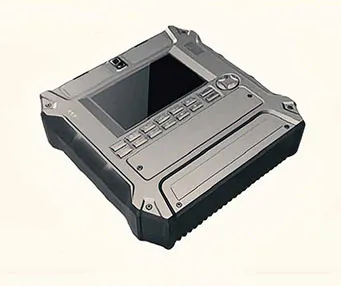
The relatively large housing has different wall heights and several functional zones. Base openings locate hardware, while the vertical partitions organise components and add local stiffness. These features combine dimensional, cosmetic and mould-release requirements.
Uneven wall sections can cool and shrink at different rates. Gate position, runner balance, venting, packing and cooling-circuit layout must work together to limit warpage, sink marks, weld lines and residual stress. Long edges and broad surfaces magnify deviations, while holes and cut-outs must retain their true positional relationship to mating components.
Before tool manufacture, we review the 3D model and 2D drawing for draft, wall transitions, rib proportions, parting line, gate vestige, venting, ejector locations, shrinkage compensation and likely warpage. DFM findings affecting appearance, mould release or assembly are resolved before the mould design is released.
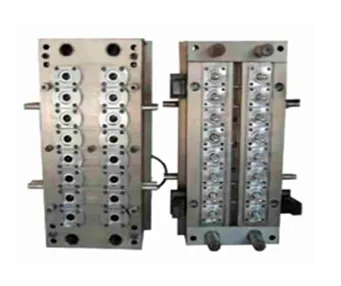
Production Mould Tooling for Repeat Orders
For recurring 5,000-piece orders, the tool should be specified around the expected programme life. Annual demand, ABS grade, part size, surface specification, cavity arrangement and maintenance expectations influence mould steel selection and construction.
The approved texture is applied to the relevant cavity surfaces. Draft must suit the texture depth and pull direction to prevent scuffing or drag marks. Because the texture remains visible beneath the coating, its grade, the white colour and target gloss should be approved as one cosmetic system.
Tool-trial parts are inspected before series-production approval. Critical interfaces are verified with mating components where available, revealing tolerance-stack issues that isolated dimensional checks may miss. Corrections are agreed before the production batch begins.
ABS Injection Moulding with Controlled Appearance and Fit
ABS offers electronic housings a practical balance of impact resistance, rigidity, mouldability and paintability. The resin grade must match the product specification. Standard ABS is not described as flame-retardant unless the selected grade carries the required rating and documentation.
Once the process window is established, melt and mould temperatures, injection speed, holding pressure and cooling time are maintained for repeatable production. Inspection focuses on:
Overall flatness and enclosure warpage
Size and true position of mounting holes
Alignment of windows, slots and connector openings
Condition of ribs, partitions and screw bosses
Flash, short shots, sink marks and visible flow defects
Fit with the approved panels and mating components
White Spray Painting over a Textured Moulded Surface
Mould texturing forms the permanent surface pattern; white spray painting provides the specified colour, gloss and final appearance. Because a texture reference alone does not define a painted surface, the complete finish should be approved on a representative sample.
Parts are cleaned and prepared for the selected paint system. Coating must cover faces, walls, recesses and edges evenly without runs, dry spray or excessive build-up. Locating faces, holes and close-fitting interfaces can be masked where coating thickness may change assembly fit.
After curing, parts are checked for colour, gloss, adhesion and agreed cosmetic limits, including contamination, thin coverage, runs, overspray and handling damage. Separators or individual protection prevent painted surfaces from rubbing during sea transport.
One Supplier for Moulding, Finishing and Component Coordination
YS Rapid coordinates the enclosure with other custom components, completes dimensional and visual inspection, checks fit using approved samples, and packs the parts for consolidated shipment. The buyer therefore has one manufacturing partner for mould tooling, series production, painting and delivery preparation.
Information to Include in Your RFQ
For an accurate injection moulding and mould tooling quotation, please provide:
3D CAD file and dimensioned 2D drawing
Required ABS grade or performance requirements
Expected quantity per order and estimated annual volume
Mould texture reference or texture specification
White colour reference, target gloss and paint-system requirements
Critical dimensions and assembly interfaces
Mating parts, approved fit samples or an assembly drawing
Cosmetic acceptance criteria, inspection requirements and packaging method
If the design is not yet ready for tooling, we can review it for mouldability and identify practical changes before mould manufacture begins.
Request a Quote for Custom ABS Enclosures
Looking for a plastic injection moulding company for a custom electronic enclosure, production mould tooling or repeat batch manufacturing? Send YS Rapid your drawings, forecast quantity and finish requirements. We will review the tooling approach, moulding risks, painted finish, critical interfaces and delivery requirements as one coordinated project.
 EN
 jp
 ko
 fr
 de
 es
 it
 pt
 tr
 ar
 iw