The Manufacturing Challenge Behind This Enclosure
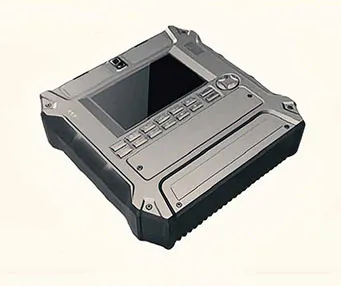
The back of the housing contains a rib network designed to improve stiffness without making the entire wall excessively thick. Several fastening bosses and locating features are distributed across the part. These details introduce three common injection-molding risks.
First, excessive material around rib and boss intersections can create sink marks on the cosmetic side. Second, uneven filling or cooling can distort the broad, curved housing profile. Third, shrinkage around internal features can affect the position of screws, electronics, or the mating enclosure.
Before mold manufacturing, our engineers review the customer’s 3D model and 2D drawing. Draft angles, wall transitions, rib and boss proportions, parting lines, gate location, ejection, and potential deformation areas are evaluated during DFM. Any proposed change that may affect appearance or assembly is submitted for approval before mold steel is cut.
From Prototype to Finished Injection-Molded Parts
1. Prototype and Assembly Verification
When required, prototype housings can be produced before tooling to check the overall shape, internal clearances, fastening positions, and relationship with the electronic components. Discovering interference at this stage is faster and less costly than modifying a completed production mold.
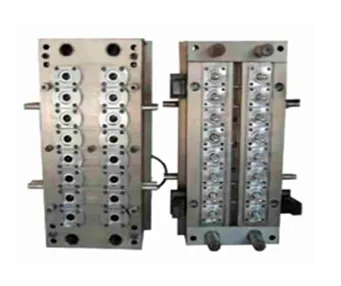
2. DFM and Injection Mold Development
After design approval, we confirm the ABS grade, shrinkage allowance, cosmetic requirements, estimated order quantity, and critical assembly dimensions. The expected mold-making time for this project is approximately 25–30 days.
The tooling plan is developed for stable batch production rather than simply producing an acceptable first sample. Mold filling, cooling, venting, ejection, and the repeatability of internal features are considered together.
3. Mold Trial and Sample Approval
Trial parts are checked for incomplete filling, flash, sink marks, weld lines, deformation, ejection marks, and dimensional variation. Critical features are measured against the drawing. When mating parts are available, we also check positioning, screw access, seating, and closure condition.
If correction is required, we determine whether it should be made through molding parameters, mold adjustment, or a customer-approved design revision. Approved samples then serve as the production reference.
4. Batch Flame-Retardant ABS Injection Molding
Flame-retardant ABS is often selected for electronic housings because it combines practical moldability, impact resistance, dimensional stability, and defined flame-performance options. The exact resin grade and required rating must be specified according to the end product’s operating and regulatory requirements.
During production, molding parameters are controlled to maintain the enclosure profile and consistency of its internal features. Visual and dimensional checks focus on the screw bosses, rib intersections, openings, edge profile, and mating surfaces.
5. Product Fit Check
Passing an individual dimensional inspection does not always guarantee smooth assembly. Where mating components or an approved checking fixture are provided, we verify alignment, seating, fastening access, closure, and obvious interference before surface finishing.
6. RAL 9005 Painting
After molding approval, the specified surfaces are prepared and painted RAL 9005 black. Paint coverage, adhesion, appearance, contamination, handling marks, and overspray are inspected. Fastening points, mating faces, and other functional areas can be masked where the drawing requires them to remain coating-free.
7. Final Inspection and Export Packing
Finished housings receive final visual and dimensional checks against the approved sample and drawing. Packaging is arranged to reduce rubbing, paint damage, and part deformation during transportation.
Why Source Custom Electronic Enclosures from YS RAPID?
One project team coordinates prototypes, tooling, molding, painting, inspection, and delivery.
DFM feedback considers moldability, cosmetic appearance, and assembly function.
Mold trials and sample approval are completed before batch production.
Mating-part checks help identify assembly issues before shipment.
Functional areas can be protected during RAL color painting.
Final inspection and export packing are managed before dispatch.
For European engineering and purchasing teams, this provides a clear route from design verification to repeatable molded parts without coordinating multiple manufacturing vendors.
Request a Quote for Your ABS Electronic Enclosure
If you are looking for a custom injection molding manufacturer for an electronic enclosure, send YS RAPID your 3D model, 2D drawing, estimated quantity, required flame-retardant grade, surface specification, and available mating-part information.
Our team can review moldability, tooling strategy, estimated lead time, finishing requirements, and assembly-verification needs before quotation. We support projects from prototype validation and injection mold making to batch production and finished parts ready for export.
 EN
 jp
 ko
 fr
 de
 es
 it
 pt
 tr
 ar
 iw