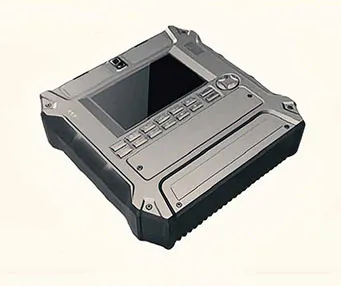
How We Made the Textured ABS-Like Housings
We began with a 3D-printed master pattern for the housing. Its visible surfaces were sanded to remove print marks and create an even base for finishing. We then sandblasted the master to produce a fine matte texture. A silicone mold captured that surface detail and transferred it to the cast housings.
The 15 sets were made with an ABS-like urethane casting resin. In the United States, this process is commonly called urethane casting and is also known as vacuum casting. It suited a small run of matching enclosure prototypes that needed a molded appearance before injection tooling was built.
Surface preparation matters because a silicone mold captures both the intended texture and any unwanted marks on the master. Print lines and finishing defects therefore need to be removed before molding. We also pay attention to mating edges, holes, and other functional features when reviewing the texture and fit. The cast urethane can resemble ABS in appearance, but ABS-like does not mean it has the same properties as injection-molded ABS.
Matching the Housing with Shafts, Brackets, Gears, and Labels
The enclosure was part of a larger prototype assembly. Its mating components called for different manufacturing processes:
Component | Prototype process | Role in the project |
Shafts | CNC turning | Check shaft location and fit with adjacent components |
Aluminum brackets | CNC machining | Check mounting points and assembly position |
Brass gears | Gear hobbing | Review gear placement and mating interfaces |
Customer logo labels | Die cutting | Complete the appearance of the prototype units |
Producing these components together made it possible to review the assembled product. A fit check can reveal whether a housing opening needs more clearance, a bracket is difficult to install, or a label needs a different placement. Finding such issues at the prototype stage gives engineers a chance to refine the design before production.
Why Use Urethane Casting for 15 Sets?
A single 3D print can help answer an early question about shape. When a team needs 15 similar housings with a consistent exterior texture, silicone mold casting offers a practical way to produce the small batch. The sets can then be used for engineering reviews, assembly trials, demonstrations, and appearance checks.
The process should always match the test. Material-specific performance or the behavior of an injection-molded feature may need to be verified using the intended production resin and process. Here, the cast housings helped the team evaluate the enclosure's appearance and how it fit with the other prototype components.
Coordinating an Approximately Two-Week Build
Once the design files and finish requirements were confirmed, work on the housing master and metal parts could proceed in parallel. The master was printed, sanded, and sandblasted before the silicone mold was made. The 15 housings were cast while the shafts, brackets, gears, and labels were prepared. The completed parts were then brought together for fit and assembly review.
This project's approximately two-week turnaround is a reference, not a fixed lead time for every enclosure. Housing size, geometry, materials, finishes, drawing readiness, and the number of mating parts all affect the schedule. A complete set of CAD files and clearly identified critical interfaces help keep the plastic and metal work aligned.
Request Custom Electronics Enclosure Prototypes
If your team needs low-volume plastic housing prototypes with matching CNC components, send YS Rapid your enclosure CAD files, quantity, texture reference, mating-part drawings, and assembly requirements. We can review the best approach to the master pattern, urethane castings, machined parts, labels, and fit checks as one prototype project.
 EN
 jp
 ko
 fr
 de
 es
 it
 pt
 tr
 ar
 iw