The Challenge: Surface Marks Are Easy to See
The housing has a broad circular form, a recessed center and smaller features around its rim. These details give the development team useful points to inspect, but the transparent surfaces also make cosmetic defects more noticeable.
A silicone mold copies the surface of its master. If the master has pits, scratches or visible sanding marks, those marks can be reproduced on the cast parts. We therefore focus on smoothing the master’s visible surfaces and curved transitions before making the mold. This early preparation is essential to achieving a consistent appearance across the prototype batch.
Parting lines and the position of smaller features also need review. They affect how the part is removed from the mold and how much finishing is needed afterward.
Why Choose Vacuum Casting for This Prototype?
At this stage, the customer needed physical parts for evaluation before investing in injection tooling. Vacuum casting allows a small batch of similar plastic prototypes to be made from a prepared master and silicone mold. It is suited to design reviews in which engineers need more than a single display model but are still refining the product.
These housings support checks of the visible design, available internal space and fit with adjoining components. The material is described as PC-like because it is a casting resin selected to approximate certain characteristics of polycarbonate. It is not a specified injection molded PC grade.
If a validation test depends on exact material properties, cleaning or sterilization conditions, or medical regulatory documentation, those requirements must be reviewed separately when choosing the test material.
Support for the Wider Prototype Assembly
A medical device housing may need brackets, mounting components or other parts before engineers can complete an assembly check. YS Rapid can support those requirements alongside vacuum casting prototypes, selecting a process for each component according to its material and function.
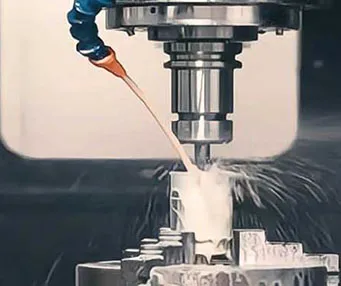
Our related prototype services include CNC aluminum prototypes for brackets and mounting plates, CNC machined metal parts for shafts and fittings, and CNC plastic prototypes when testing calls for a specific engineering plastic. If the customer provides assembly files and requirements, we can review how these parts should fit with the cast housing.
This gives product development teams one point of contact for a multi-part prototype project while keeping the manufacturing choice appropriate to each part.
Send Us Your Prototype Requirements
For a transparent medical equipment housing, the right starting point is the CAD model and a clear description of the planned tests. Tell us which surfaces must remain visually clear, how many parts you need, which components must fit together and whether any test requires a specified material.
YS Rapid can review the housing for vacuum casting and recommend CNC machining for any accompanying metal or plastic prototypes.
Contact YS Rapid to discuss your medical device prototype project.
 EN
 jp
 ko
 fr
 de
 es
 it
 pt
 tr
 ar
 iw