Why one-piece casting suited this bracket
The posts, clips, mounting tabs, and central boss are not decorative details. Their positions affect how the bracket locates, fastens, and interacts with neighboring parts. A bonded, multi-piece prototype would add joints where the customer needs to evaluate an integrated component.
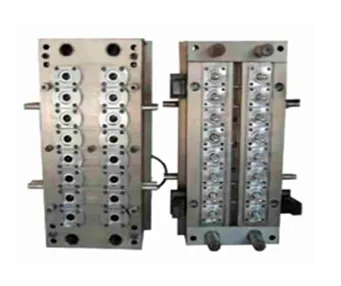
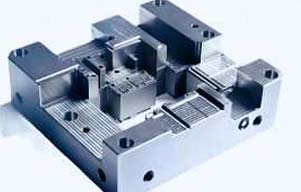
For a 20-piece run, a silicone mold can reproduce this combination of features without the machining time required for every individual bracket. Before making the mold, we check the CAD file for wall thickness, undercuts, parting line placement, air traps, and whether delicate features can be removed from the mold without damage. A finished master pattern defines the mold cavity, so the accuracy and surface quality of that master need attention as well.
One-piece casting does not eliminate design review. If a clip or deep feature cannot be molded and released reliably, we flag it before tooling and discuss the smallest practical change. The goal is a prototype that supports the customer's assembly test, not a visually similar part with compromised mating features.
What "PA-like" means for functional prototypes
The bracket is specified in black PA-like resin. In urethane casting, this means a polyurethane formulation chosen to approximate certain characteristics of nylon. It is not injection-molded PA, and the two materials should not be treated as interchangeable for qualification testing.
We select the casting grade against the actual test plan: stiffness, handling strength, clip engagement, and any relevant temperature or chemical exposure. Pigment is mixed into the resin for a black part without paint. That suits an internal component where appearance is secondary to fit and function.
These prototypes can help answer questions about installation, clearance, and initial operation. If the team needs to validate long-term fatigue, repeated snap cycles, or performance at automotive service temperatures, we review those requirements separately and may recommend prototypes in the intended production material.
Inspection focused on assembly features
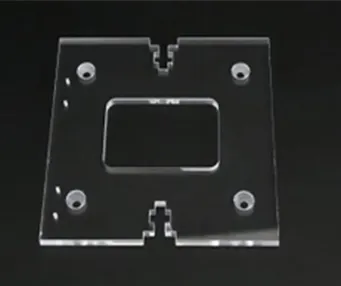
The features worth measuring are the ones that determine whether the bracket fits: mounting-hole locations, post positions, boss geometry, clip engagement areas, mating faces, and the rectangular opening. Castings also need visual checks for flash, incomplete fill, bubbles, and damage around thin details.
Our proposed sequence is to review a first casting, confirm any critical dimensions and mating fit, then produce the remaining parts. Depending on mold life and geometry, completing 20 parts may require more than one silicone mold. If the customer supplies mating components, we can add a trial assembly check before shipment. Drawing tolerances and functional acceptance criteria should be agreed upon before production rather than inferred from a standard casting tolerance.
Coordinating the rest of the prototype build
Automotive testing often involves an assembly rather than a single bracket. YS Rapid can coordinate CNC prototype machining, turned metal components, 3D printed parts, urethane-cast plastic parts, and trial assembly within the same project. This gives the development team a practical route from individual prototypes to a set that can be checked together.
Painting, pad printing, and screen printing are available when a prototype needs a finished appearance or markings. This particular bracket needs none of them: black resin and cleanly produced functional features are the priority. The same project coordination remains available if later parts in the assembly require those finishing steps.
Send us your automotive prototype project
Share the 3D CAD model, drawings or marked critical dimensions, required quantity, mating-part information, and the tests the parts must support. We will review whether cast urethane prototypes, CNC machining, or another prototyping method best fits the geometry and purpose of the build.
 EN
 jp
 ko
 fr
 de
 es
 it
 pt
 tr
 ar
 iw