Making the Large Shell as One Piece
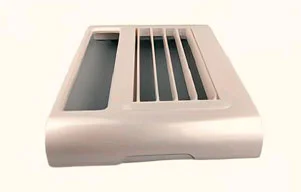
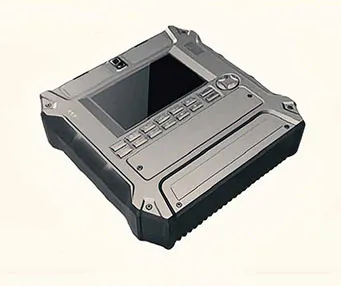
The housing in the photograph has a long body, recessed areas, several openings, and separate trim pieces. These features matter when planning a silicone mold: the master pattern, mold split, casting removal, and access for finishing all affect how a full-size shell can be reproduced. For this project, the principal shell was cast as one piece rather than assembled from several cosmetic panels.
Urethane casting, also called vacuum casting or polyurethane casting, is suited to producing a short run from a master pattern and silicone mold. For ten matching housings, it provided a practical route to repeated exterior shells without committing to an injection mold at the prototype stage. A one-piece approach still requires a geometry review; size, undercuts, wall thickness, and surface requirements determine whether a particular enclosure can be cast this way.
The cast housing material should be specified for its actual prototype use. Urethane resins can be chosen to resemble a target plastic in appearance or selected properties, but a cast urethane shell is not identical to an injection molded ABS part. We discuss any critical mechanical, thermal, or testing requirements before recommending a resin.
CNC Machining, Silicone Parts, and a Coordinated Finish
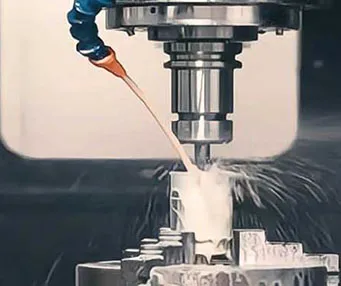
The outer housing was only one part of the deliverable. ABS components were CNC machined where the project called for that material, while the metal fittings and other precision parts were also made by CNC machining. The flexible silicone components were produced separately using molds. These processes were coordinated around the same ten-set assembly, allowing the customer to source the matching parts together.
Surface preparation followed the casting work. Sanding helped prepare the visible shell surfaces for black paint, and screen printing added the specified markings. For a prototype that will be assembled and reviewed, finish planning has to consider the interfaces as well as the appearance: coating on a mating surface or around a hole can affect how a part fits. Assembly support brought the cast, machined, and silicone components together according to the customer's requirements.
What We Review Before Quoting a Multi-Part Prototype
An engineer sourcing a medical equipment housing needs a clear answer on the complete build. YS Rapid reviews the 3D models and available drawings, quantity by part number, overall housing dimensions, openings and mating interfaces, target material properties, cosmetic requirements, and whether the requested deliverable is loose parts or assembled sets. We then identify which parts fit urethane casting, which need CNC prototype machining, and which require separate silicone molding.
That review is especially important for a large one-piece housing. We check casting feasibility and the proposed finish before committing to a schedule. The approximately two-week timeline described here is the result of this particular project, not a fixed lead time for every enclosure; geometry, revision status, finishing scope, and assembly complexity can change the plan.
These are prototype components manufactured to the agreed specifications. If the equipment has application-specific cleaning, material, or validation requirements, include them in the RFQ so they can be reviewed explicitly.
Request a Quote for Medical Equipment Prototypes
Need a small batch of equipment housings together with CNC parts and flexible components? Send YS Rapid the CAD files, drawings, quantity, finish and printing requirements, and an assembly list. We can assess the one-piece casting approach and propose a coordinated plan for prototypes, finishing, and assembly.
 EN
 jp
 ko
 fr
 de
 es
 it
 pt
 tr
 ar
 iw