Why use vacuum casting instead of machining every part?
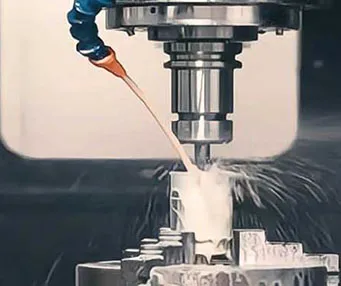
The geometry drives the process choice. CNC machining can produce an accurate master, but cutting the same curved features 50 times adds machining hours. Injection moulding would require a more substantial tooling commitment while the design is still being developed. With silicone mould vacuum casting, the detailed work goes into one master and a planned set of moulds, making it a suitable option for this small batch.
The castings can support assembly checks and other agreed development evaluations. ABS-like describes the selected polyurethane's intended similarity to ABS; it does not mean the parts are made from injection-moulded ABS. If the brackets will carry loads or face heat, chemicals or long service life, the intended test conditions and resin data must be reviewed separately.
How we plan the master, moulds and 50-part run
First, we review the CAD model and drawing for parting lines, wall thickness, narrow spaces between the curved arms, and any undercuts that could complicate demoulding. The master pattern is then made and finished to the agreed surface standard. Its curves and interfaces need to be checked before mould making because imperfections in the master can be copied into every casting.
Silicone moulds have a limited working life, so a 50-piece order requires a mould quantity and replacement plan rather than assuming one mould will cover the entire run. The final number depends on part geometry, resin and acceptable mould wear. First castings are used to check visible surfaces and selected dimensions before the remainder of the batch proceeds. The parts are then trimmed and inspected against the agreed drawing requirements.
Reviewing the tolerance requirement
The customer requires tolerance ±0.15 mm. Before accepting that tolerance for production, we need to identify the dimensions it applies to and how they will be measured. Resin shrinkage, mould deformation and the length of a curved feature can affect the result. Critical attachment points, mating features and overall dimensions should therefore be marked on the 2D drawing. If casting alone cannot reliably hold a particular feature, we can review a secondary machining step or a design adjustment with the customer.
The planned production time is approximately three weeks for the master, moulds, initial castings, batch casting and inspection. We confirm the schedule after reviewing the final files, finish requirements and inspection plan; international shipping time is quoted separately.
Get a quote for complex vacuum-cast plastic parts
If you need a small batch of complex plastic brackets or other curved prototype parts, send YS Rapid your 3D CAD file, 2D drawing, quantity and intended test conditions. Mark the dimensions that must meet tolerance and include any mating-part information. We will review the geometry and recommend a suitable vacuum casting, CNC machining or prototype injection moulding route, together with a mould plan and quotation.
 EN
 jp
 ko
 fr
 de
 es
 it
 pt
 tr
 ar
 iw