As manufacturers continue to pursue lighter, stronger, and more complex metal components, pressure die casting has become one of the most efficient production technologies available. By forcing molten metal into hardened steel dies under high pressure, the process delivers exceptional dimensional consistency, fine surface finishes, and high production efficiency that conventional casting methods cannot easily match.
For companies seeking a reliable pressure die casting manufacturer, choosing an experienced production partner is equally important as selecting the process itself. YS Rapid, a professional China pressure die casting supplier, provides aluminum and zinc pressure die casting services alongside CNC machining, rapid prototyping, injection molding, and surface finishing to support projects from prototype validation to full-scale manufacturing.
Understanding Pressure Die Casting
Pressure die casting is a permanent mold casting process in which molten metal is injected into a precision-machined steel die at extremely high speed and pressure. The molten alloy rapidly fills every cavity before solidifying, allowing manufacturers to produce complex metal parts with excellent repeatability and minimal variation.
Unlike sand casting or investment casting, pressure die casting uses reusable hardened dies capable of producing thousands or even millions of identical components, making it particularly suitable for medium- and high-volume manufacturing.
Because the process combines fast cycle times with excellent dimensional stability, it has become a preferred solution for industries requiring lightweight structural parts and intricate geometries.
How the Pressure Die Casting Process Works
A successful PDC die casting project depends on controlling every stage of production rather than simply injecting molten metal into a mold.
Die Design and Manufacturing
The manufacturing process starts with precision die engineering.
The steel die consists of two hardened halves containing cooling channels, runners, overflow systems, ejector mechanisms, and venting features. Engineers optimize gate locations and metal flow paths to reduce turbulence while ensuring complete cavity filling.
Proper die design directly affects:
Filling balance
Cooling efficiency
Surface quality
Tool life
Production consistency
Although tooling requires a higher initial investment than other casting methods, it enables economical production over long manufacturing runs.
Metal Preparation
Pressure die casting commonly uses non-ferrous alloys because of their excellent fluidity and casting performance.
Typical materials include:
Aluminum Alloys
Aluminum offers an outstanding balance of strength, corrosion resistance, lightweight performance, and thermal conductivity. It is widely used in automotive, aerospace, electronics, and industrial equipment.
Zinc Alloys
Zinc provides exceptional dimensional accuracy, thin-wall capability, and excellent surface finish, making it suitable for decorative components, electronic housings, and precision mechanical parts.
As a pressure die casting factory, YS Rapid manufactures both aluminum and zinc die cast components for various industrial applications.
High-Pressure Injection
The defining characteristic of die pressure casting is the injection stage.
Molten alloy is transferred into the shot chamber before a hydraulic piston forces it into the die cavity at very high velocity.
During filling, several factors must remain carefully controlled:
Injection speed
Injection pressure
Metal temperature
Die temperature
Filling sequence
The high injection pressure ensures molten metal reaches narrow ribs, deep pockets, and complex internal features before solidification begins.
Additional intensification pressure is often applied after cavity filling to compensate for solidification shrinkage and improve casting density.
Cooling and Solidification
Once the cavity is completely filled, the metal rapidly transfers heat into the steel die.
Because steel molds possess excellent thermal conductivity, cooling occurs within seconds.
Uniform cooling is essential because uneven temperature distribution may cause:
Internal stress
Distortion
Shrinkage defects
Dimensional variation
Modern pressure die casting factories often integrate temperature-controlled cooling systems that maintain consistent thermal conditions throughout continuous production.
Part Ejection and Secondary Operations
After solidification, the die opens automatically and ejector pins remove the finished casting.
Although the part leaves the die close to its final shape, several secondary operations may still be required, including:
Runner removal
Flash trimming
Deburring
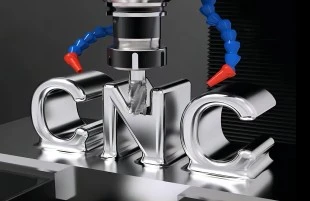
CNC machining
Drilling and tapping
Surface polishing
Powder coating
Painting
Plating
Combining die casting with precision CNC machining allows manufacturers to achieve tighter tolerances for critical functional surfaces while maintaining the productivity advantages of casting.
Why Pressure Makes the Difference
The term pressure die refers to both the casting equipment and the manufacturing principle behind the process.
Compared with gravity casting, applying high pressure provides several engineering advantages:
Improved Metal Flow
High pressure enables molten metal to completely fill thin sections and intricate geometries before freezing.
Reduced Porosity
Properly controlled pressure minimizes shrinkage defects and improves casting density, resulting in stronger components.
Superior Repeatability
Consistent injection conditions allow manufacturers to produce identical parts over thousands of production cycles.
Better Surface Finish
The molten alloy accurately reproduces die surfaces, reducing finishing requirements and improving cosmetic appearance.
Design Considerations for Pressure Die Casting
Designing components specifically for pressure die casting significantly improves manufacturability.
Experienced China pressure die casting manufacturers recommend considering several engineering principles during product development.
Uniform Wall Thickness
Maintaining consistent wall thickness promotes even cooling and minimizes shrinkage.
Proper Draft Angles
Draft facilitates easy ejection while protecting die surfaces from excessive wear.
Smooth Corner Radii
Rounded transitions improve metal flow and reduce stress concentration.
Strategic Rib Placement
Ribs increase structural rigidity without significantly increasing component weight.
Minimized Undercuts
Reducing complex undercuts lowers tooling complexity and production costs.
Early collaboration between design engineers and manufacturing teams often prevents expensive tooling modifications later in the project.
Typical Industrial Applications
The versatility of pressure die casting China services allows manufacturers to supply components across numerous industries.
Automotive
Pressure die casting produces transmission housings, engine brackets, structural supports, heat sinks, steering components, and lightweight chassis parts.
Consumer Electronics
Electronic products frequently use die cast aluminum housings for improved heat dissipation and structural strength.
Medical Equipment
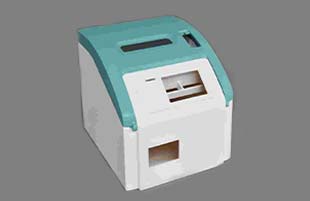
Manufacturers produce durable instrument housings, support brackets, and diagnostic equipment components with excellent dimensional consistency.
Industrial Automation
Robotics, automation equipment, and industrial machinery benefit from lightweight cast components with complex internal geometries.
Telecommunications
Heat sinks, communication enclosures, and network hardware often rely on aluminum pressure die casting because of its excellent thermal conductivity.
Pressure Die Casting Compared with CNC Machining
Although both processes manufacture precision metal components, they solve different production challenges.
| Feature | Pressure Die Casting | CNC Machining |
| Best Production Volume | Medium to High | Prototype to Low Volume |
| Initial Tooling Cost | High | Minimal |
| Complex Internal Features | Excellent | Limited |
| Material Waste | Low | Higher |
| Cycle Time | Seconds | Minutes to Hours |
| Part Consistency | Excellent | Excellent |
For high-volume production, pressure die casting generally offers lower per-part cost after tooling investment, while CNC machining remains more economical for prototypes and small production runs.
Many pressure die casting companies combine both technologies, using casting for the primary geometry and CNC machining for precision features.
Choosing a Reliable Pressure Die Casting Supplier
Selecting the right pressure die casting company involves evaluating manufacturing capability rather than focusing solely on pricing.
Important considerations include:
Advanced die casting equipment
Aluminum and zinc casting expertise
In-house CNC machining
Comprehensive quality inspection
Surface finishing capabilities
Engineering support
Rapid tooling development
Stable production capacity
A comprehensive manufacturing partner can reduce project lead times by integrating multiple production processes under one roof.
As a professional pressure die casting supplier, YS Rapid provides one-stop manufacturing services that include pressure die casting, CNC machining, rapid prototyping, sheet metal fabrication, injection molding, and finishing operations. This integrated approach enables customers to move efficiently from design verification to serial production while maintaining quality and delivery consistency.
Conclusion
Pressure die casting has become an essential manufacturing technology for producing high-quality metal components with excellent dimensional accuracy, repeatability, and production efficiency. By combining precision tooling, controlled metal flow, high injection pressure, and rapid cooling, manufacturers can create lightweight yet durable components suitable for demanding industrial applications.
Whether developing automotive parts, electronic enclosures, industrial equipment, or consumer products, partnering with experienced China pressure die casting manufacturers ensures optimized tooling, stable production quality, and lower long-term manufacturing costs. With integrated engineering expertise and comprehensive manufacturing capabilities, companies such as YS Rapid help customers transform complex product designs into reliable production-ready components through advanced pressure die casting technology.
 EN
EN
 jp
jp  ko
ko  fr
fr  de
de  es
es  it
it  pt
pt  tr
tr  ar
ar  iw
iw