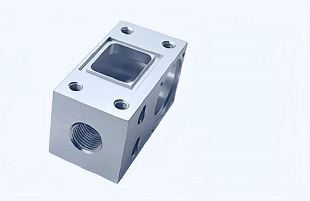
The global precision machining industry plays a fundamental role in advancing healthcare innovation. From minimally invasive surgical instruments to orthopedic implants and diagnostic equipment, modern medical devices rely on highly accurate machined components that must meet stringent quality, safety, and regulatory requirements. Even microscopic dimensional variations can affect product performance, patient safety, and clinical outcomes.
As medical technology continues to evolve, manufacturers require machining partners capable of producing complex parts with exceptional consistency. Professional China precision medical machining providers such as YS Rapid combine advanced CNC equipment, engineering expertise, and comprehensive quality control to manufacture precision medical components for prototype development, clinical validation, and production. Their integrated capabilities support the growing demands of today's precision manufacturing industry.
Why Precision Machining Matters in Medical Device Manufacturing
Medical devices differ significantly from general industrial products. Components often interact directly with patients, healthcare professionals, or sensitive diagnostic systems, requiring exceptional manufacturing precision.
Unlike conventional machining projects, medical CNC machining emphasizes not only dimensional accuracy but also surface integrity, repeatability, material traceability, and process stability.
Manufacturers must consistently produce components that satisfy demanding specifications for:
These requirements make precision machining one of the most critical production technologies in modern medical manufacturing.
Medical Devices That Depend on Precision Machining
The medical sector includes a wide range of products requiring precision-machined parts. Each category presents unique engineering challenges and manufacturing standards.
Surgical Instruments
Reusable and disposable surgical tools require outstanding dimensional consistency for safe operation.
Typical machined components include:
Forceps
Needle holders
Scalpels
Retractors
Orthopedic instruments
Endoscopic tools
Complex geometries and ergonomic designs demand advanced multi-axis CNC machining.
Orthopedic Implants
Joint replacements and trauma fixation systems rely on precision machining to achieve accurate anatomical fit.
Common products include:
Hip implants
Knee components
Bone plates
Spinal fixation systems
Trauma screws
These parts often require titanium or stainless steel machining followed by polishing or passivation.
Dental Components
Dental restorations and implant systems require extremely high accuracy because even slight deviations can affect patient comfort and long-term performance.
Precision machining is widely used for:
Diagnostic Equipment
Medical imaging and laboratory instruments incorporate precision-machined structural components that support stable measurement accuracy.
Examples include:
Minimally Invasive Devices
As minimally invasive procedures become increasingly common, manufacturers require miniature components with intricate features.
These products include:
Producing these parts demands advanced machining strategies and specialized tooling.
Materials Commonly Used in Medical Machining
Material selection significantly influences component performance, sterilization compatibility, and product longevity.
An experienced medical machining manufacturer understands the machining characteristics of medical-grade materials while maintaining strict process control.
Stainless Steel
Medical-grade stainless steels offer excellent corrosion resistance, strength, and sterilization performance.
They are frequently used for surgical instruments and reusable medical equipment.
Titanium
Titanium combines exceptional strength with low weight and outstanding biocompatibility.
Its excellent osseointegration properties make it a preferred material for orthopedic and dental implants.
Aluminum
Although not typically used for implantable devices, aluminum remains popular for diagnostic equipment, laboratory instruments, and medical automation systems because of its lightweight characteristics and machinability.
Engineering Plastics
High-performance polymers such as PEEK, PTFE, and UHMW-PE provide chemical resistance, electrical insulation, and low friction for specialized medical applications.
Professional China medical machining providers support a wide range of metallic and engineering plastic materials depending on device requirements.
CNC Technologies Supporting Medical Manufacturing
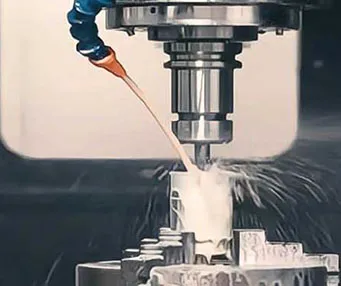
Modern medical production depends on multiple CNC technologies working together to achieve complex geometries and consistent quality.
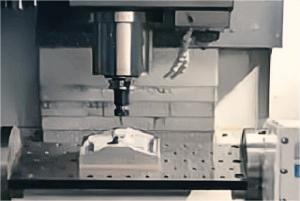
Multi-Axis CNC Milling
Five-axis machining enables manufacturers to create highly complex surfaces while reducing multiple setups.
This improves both geometric accuracy and production efficiency for intricate medical components.
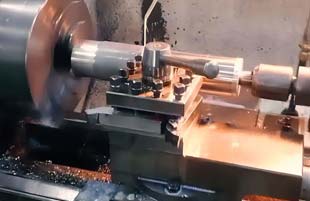
CNC Turning
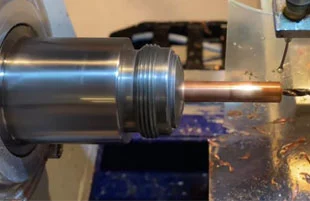
Rotational components such as connectors, implant screws, and precision shafts are efficiently produced through CNC turning with excellent concentricity.
Micro Machining
Many medical products require miniature features measured in fractions of a millimeter.
Micro machining technologies support:
Small holes
Thin walls
Fine slots
Precision threads
Delicate contours
Secondary Precision Operations
After machining, components may undergo additional processes such as:
Surface polishing
Bead blasting
Passivation
Laser marking
Electropolishing
Ultrasonic cleaning
These finishing operations improve corrosion resistance, appearance, cleanliness, and product identification.
Manufacturing Challenges in the Medical Industry
Producing medical components involves challenges beyond achieving dimensional accuracy.
Tight Tolerances
Medical assemblies often require micron-level consistency to ensure proper fit and functionality across multiple mating components.
Surface Quality
Poor surface finishes may harbor contaminants or affect device performance.
Many implantable products require exceptionally smooth surfaces to reduce wear and improve biological compatibility.
Material Integrity
Heat generation during machining must be carefully controlled to prevent metallurgical changes that could influence mechanical properties.
Traceability
Medical manufacturing requires complete documentation covering raw materials, machining parameters, inspection records, and production batches.
A professional medical machining company establishes rigorous quality management procedures throughout every manufacturing stage.
Precision Inspection for Medical Components
Inspection is an essential part of every precision medical machining service.
Manufacturers commonly verify components using:
Coordinate Measuring Machines (CMM)
Optical measurement systems
Surface roughness testers
Height gauges
Micrometers
Vision inspection equipment
Inspection data ensures every component conforms to engineering drawings before shipment.
For critical medical products, statistical process control and first article inspection further enhance manufacturing consistency.
The Value of Engineering Collaboration
Successful medical device manufacturing begins long before machining starts.
An experienced precision medical machining supplier often collaborates with customers during product development to improve manufacturability without compromising functionality.
Engineering support may include:
Material recommendations
Feature optimization
Tolerance analysis
Tool accessibility evaluation
Cost reduction opportunities
Production scalability planning
Early design collaboration reduces production risks while shortening development cycles.
From Prototype to Production
Medical product development typically progresses through several stages.
Prototype Development
Initial prototypes validate mechanical performance, ergonomics, and assembly compatibility.
Rapid CNC machining enables quick design iterations before regulatory testing.
Verification Builds
Small production batches support engineering validation, laboratory testing, and clinical evaluation.
Dimensional consistency becomes increasingly important during this phase.
Low-Volume Manufacturing
Before full commercialization, manufacturers often produce limited quantities for pilot production and regulatory approval.
Full Production
Once product designs are finalized, machining processes become highly standardized to ensure repeatable quality over long production runs.
An experienced precision medical machining manufacturer supports each development phase while maintaining consistent quality standards.
Choosing a Reliable Precision Medical Machining Partner
Medical device manufacturers should evaluate potential suppliers based on more than machining capability alone.
Important selection criteria include:
Advanced CNC machining equipment
Experience with medical materials
Comprehensive inspection systems
Stable production capacity
Engineering support
Rapid prototype capability
Surface finishing expertise
Integrated manufacturing services
A supplier capable of supporting prototype development through production simplifies project management and improves communication throughout the product lifecycle.
As a professional precision medical machining supplier, YS Rapid provides comprehensive manufacturing solutions that include CNC machining, rapid prototyping, sheet metal fabrication, injection molding, and finishing services. With expertise across multiple industries and dedicated capabilities for medical device manufacturing, the company helps customers accelerate product development while maintaining high standards of precision and quality.
The Future of Precision Manufacturing in Healthcare
As healthcare technologies become increasingly personalized, connected, and minimally invasive, demand for precision-machined medical components will continue to grow.
Robotic surgery, wearable medical devices, advanced diagnostic systems, and patient-specific implants all require increasingly sophisticated manufacturing capabilities. The ongoing evolution of the precision manufacturing industry will rely on advanced CNC technologies, digital manufacturing workflows, and highly skilled engineering teams to deliver reliable, high-performance medical components.
By combining engineering expertise with precision production technologies, experienced precision medical machining manufacturers play a critical role in supporting innovation throughout the medical device industry. Whether producing surgical instruments, implant components, diagnostic equipment, or customized medical assemblies, precision machining remains one of the most important foundations of modern healthcare manufacturing.
 EN
EN
 jp
jp  ko
ko  fr
fr  de
de  es
es  it
it  pt
pt  tr
tr  ar
ar  iw
iw