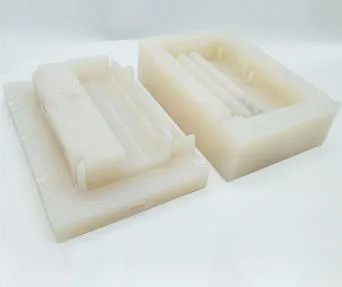
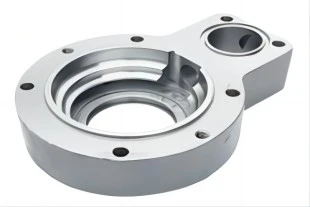
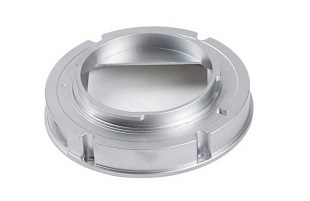
Plastic CNC machining is widely used for functional prototypes, jigs, fixtures, gears, housings, insulators, medical components, and low-volume production parts. Unlike injection molding, it usually requires no dedicated mold, allowing engineers to test designs with real engineering plastics before committing to production tooling.
Choosing the correct polymer is critical. Plastics respond differently to cutting heat, clamping pressure, moisture, and temperature changes. A material that looks suitable on a datasheet may still create dimensional instability or machining difficulty if its physical behavior is not considered during design.
What Is Plastic CNC Machining?
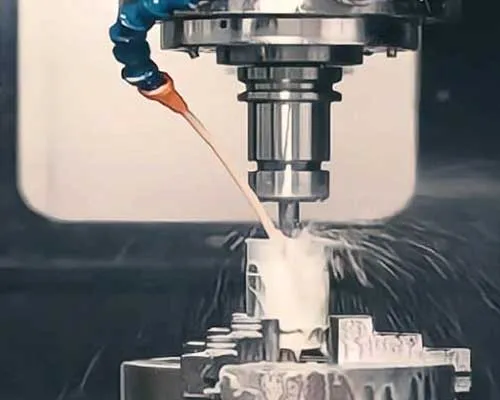
Plastic CNC machining is a subtractive manufacturing process that removes material from solid polymer stock using computer-controlled milling, turning, drilling, boring, and threading operations.
It is especially useful when production quantities are low or designs are still changing. Engineering teams can manufacture parts directly from CAD data and modify dimensions without changing a mold.
For projects requiring functional polymer components, china plastic cnc machining can be used to evaluate fit, assembly, wear behavior, and material performance before higher-volume production begins.
How Do Common CNC Plastics Compare?
Plastic material comparison means evaluating polymers according to stiffness, dimensional stability, temperature resistance, chemical performance, wear behavior, and cost.
| Material | Main Advantage | Main Limitation | Typical Application |
|---|
| ABS | Economical and easy to prototype | Moderate heat resistance | Housings, covers |
| POM / Acetal | Stable and low friction | Limited high-temperature use | Gears, bushings |
| PEEK | Excellent thermal and chemical performance | High material cost | Medical, aerospace |
| Nylon | Tough and wear resistant | Moisture absorption | Rollers, mechanical parts |
| Polycarbonate | High impact resistance | Stress sensitivity | Guards, housings |
| PTFE | Chemical resistance and low friction | Soft and difficult to hold tightly | Seals, insulators |
No material is universally best. The application should determine which property receives priority.
Why Is POM Popular for Precision Machined Parts?
POM machining is the production of acetal components where dimensional stability, stiffness, low friction, and machinability are important.
POM is widely used for gears, rollers, guides, bushings, and fixtures. Compared with softer polymers, its stiffness makes it easier to hold during machining and helps reduce deformation.
It also has relatively low friction, making it useful for moving mechanical components. For many general engineering applications, POM provides a practical balance between performance and cost without requiring a premium polymer.
When Is PEEK Worth the Higher Cost?
PEEK machining is used when a plastic component must withstand demanding thermal, mechanical, or chemical operating conditions.
PEEK is commonly considered for medical devices, semiconductor equipment, aerospace systems, and industrial machinery. It maintains useful properties at temperatures that would be unsuitable for many general-purpose plastics.
However, PEEK stock is significantly more expensive than ABS, POM, or nylon. Engineers should therefore identify the actual requirement—such as heat resistance, chemical resistance, or mechanical performance—that justifies the material.
Using PEEK where a lower-cost plastic already meets the specification can unnecessarily increase prototype cost.
Why Do Temperature and Moisture Matter?
Thermal and moisture stability describes how much a plastic part can change dimensions when environmental conditions change.
Engineering plastics generally expand more with temperature than metals. Cutting heat can therefore affect dimensions during machining, particularly on thin or precision features.
Nylon introduces another issue because it can absorb moisture from the surrounding environment. Moisture absorption may change dimensions, making environmental conditions important for precision applications.
Where dimensional stability becomes more important than weight or electrical insulation, engineers may compare plastic prototypes with cnc aluminium prototyping to determine whether aluminum provides a more stable alternative.
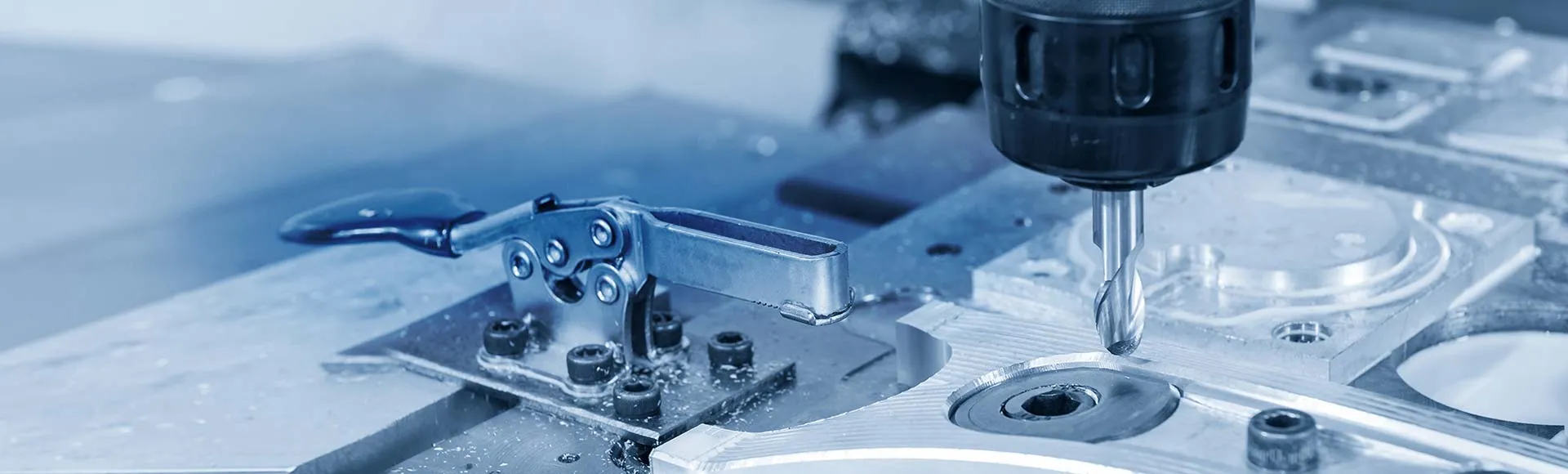
How Tight Should Plastic CNC Tolerances Be?
Plastic machining tolerance is the allowable dimensional variation that remains practical after considering material properties, geometry, temperature, and workholding.
A tolerance around ±0.05–0.10 mm can be a useful planning reference for many machined engineering-plastic features, although actual capability depends on material and part design.
POM and PEEK generally provide better dimensional stability than softer PTFE. Nylon also requires greater attention because of moisture absorption.
Instead of applying metal-style tolerances throughout a plastic drawing, designers should identify critical features such as:
Broader tolerances can normally be used on dimensions that do not affect function.
When Should Plastic Be Replaced by Metal?
Plastic-to-metal evaluation means determining whether the application requires greater stiffness, strength, temperature stability, or conductivity than a polymer can provide.
Plastics offer useful benefits including low weight, electrical insulation, chemical resistance, and reduced friction. Metals, however, can perform better under high structural loads or significant temperature changes.
During product development, using china metal prototyping alongside polymer prototypes can help engineers compare alternative materials before finalizing the production specification.
This comparison is particularly useful when the design is still evolving because machining allows both plastic and metal versions to be produced without dedicated tooling.
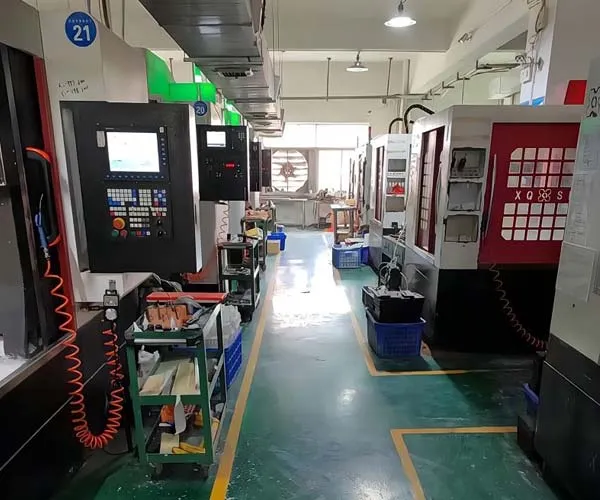
How Can Plastic CNC Machining Cost Be Reduced?
Plastic machining cost optimization means simplifying geometry and specifications while maintaining required product performance.
Several DFM decisions can reduce machining time:
Avoid unnecessarily tight tolerances.
Maintain sufficient wall thickness.
Reduce extremely deep pockets.
Use realistic internal corner radii.
Standardize hole and thread sizes.
Minimize machining setups.
Avoid premium materials unless required.
Material utilization is especially important with PEEK and other high-cost polymers. A simpler part orientation or smaller stock size can reduce waste significantly.
YS Rapid supports CNC machining for multiple plastic materials, allowing customers to evaluate prototypes and low-volume parts before deciding whether machining or molding is the better long-term production route.
FAQ About Plastic CNC Machining
Plastic CNC machining FAQs provide concise answers to common material-selection and manufacturing questions.
1. Which plastic is easiest to CNC machine?
POM is commonly considered highly machinable because it combines stiffness, dimensional stability, and good chip formation.
2. Is PEEK difficult to machine?
PEEK can be machined accurately, but its higher material cost makes process efficiency and scrap reduction particularly important.
3. Why can nylon parts change dimensions?
Nylon can absorb moisture from its environment, which can cause dimensional changes over time.
4. Why is PTFE harder to machine accurately?
PTFE is relatively soft and can deform under clamping, cutting, or measurement forces.
5. Can CNC-machined plastic parts have threads?
Yes. Threads can be machined directly, although metal inserts may be preferable when frequent assembly and disassembly are expected.
6. When should injection molding replace CNC machining?
Injection molding becomes more attractive when the design is stable and production volume is high enough to justify mold investment.
Conclusion
Plastic CNC machining is most effective when material selection and manufacturing requirements are considered together. ABS, POM, PEEK, nylon, polycarbonate, and PTFE each solve different engineering problems, so temperature, dimensional stability, wear, chemical exposure, moisture, and cost should be evaluated before machining begins.
YS Rapid can support plastic CNC prototype and low-volume manufacturing projects where engineers need to compare materials, validate designs, and refine specifications before moving into larger-scale production.
References / External Resources
Ensinger – Plastics for Machining
https://www.ensingerplastics.com/en-us/machining/machining-materials
Curbell Plastics – Plastic Machining Guidelines
https://www.curbellplastics.com/services-capabilities/fabrication-machined-parts/plastic-machining-guidelines/
Computer Numerical Control – Wikipedia
https://en.wikipedia.org/wiki/Numerical_control
 EN
EN
 jp
jp  ko
ko  fr
fr  de
de  es
es  it
it  pt
pt  tr
tr  ar
ar  iw
iw