Specifications of Project Requirements
Item | Project Details |
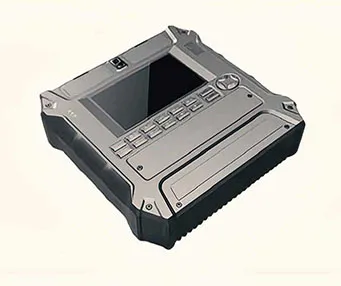
Application | Medical equipment housing |
Material | Aluminum alloy |
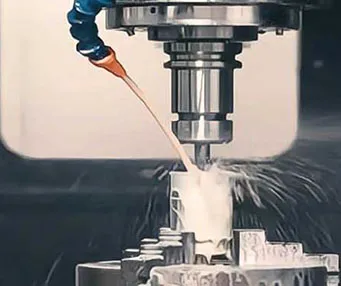
Manufacturing process | CNC milling and secondary machining |
Quantity | 20 units |
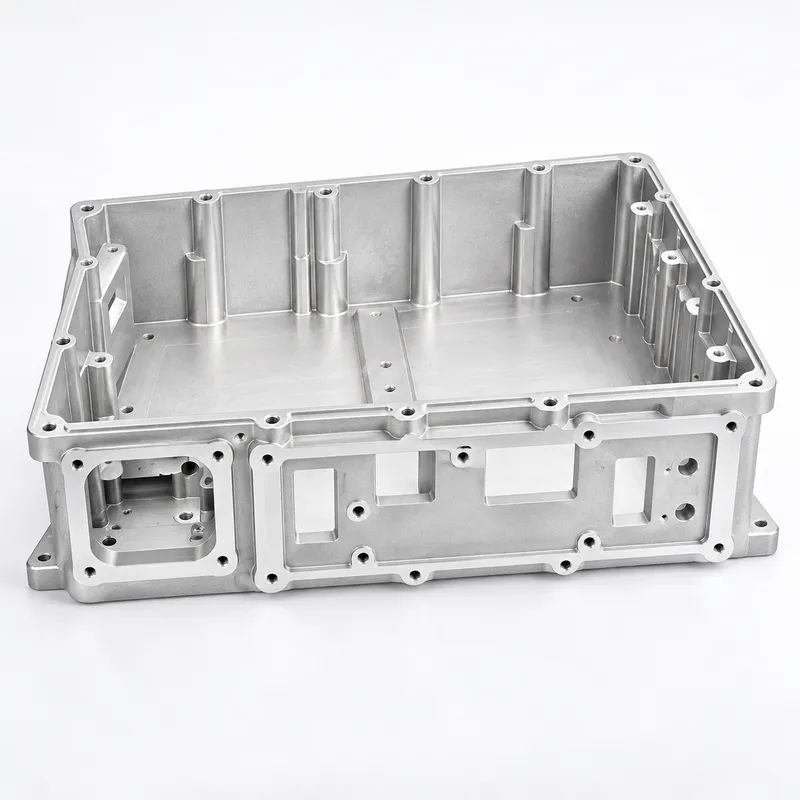
Main features | Large cavity, reinforcing ribs, bosses, openings and threaded holes |
Project stage | Functional testing and low-volume design verification |
Destination | United States |
For this type of enclosure, overall appearance is only one part of the requirement. The internal geometry may support circuit boards, brackets, connectors and other components in fixed positions. Hole locations, mounting faces and mating edges therefore had to remain consistent from the first housing to the twentieth.
Why CNC Machining Was Selected
CNC machining was chosen because the customer needed functional aluminum parts in a limited quantity. Additive manufacturing can be useful for early form studies, but the customer required machined surfaces, accurate mounting features and reliable threads for equipment assembly. Die casting may become practical at higher volumes, but tooling would add cost and reduce flexibility while the design was still being verified.
For 20 housings, CNC metal prototyping offered a practical route. It supported dimensional verification and functional assembly while leaving the customer free to update the design before committing to production tooling.
Machining a Large, Thin-Walled Housing
The housing was machined in several controlled stages. Material was removed gradually from the main cavity because an aggressive cutting sequence could allow the base or side walls to move. Machining allowance was retained after roughing so the critical mounting surfaces and holes could be finished after the main cavity had taken shape.
Fixture planning was equally important. The enclosure needed sufficient support during machining without excessive clamping pressure on the walls. Stable reference surfaces were established so that the internal bosses, side openings and front-panel features remained correctly positioned relative to one another.
The main manufacturing considerations included:
controlling flatness across the base and mating perimeter;
reducing deformation around thin walls and large openings;
maintaining the position of internal mounting bosses;
machining clean connector and access openings;
producing reliable threaded holes without damaging surrounding edges;
deburring internal corners and openings before assembly.
These details are central to a dependable custom metal prototyping service. Machining sequence, fixture design and inspection planning all affect whether a complex aluminum housing will fit correctly during assembly.
Inspection for a 20-Piece Prototype Batch
Inspection focused on the features that influenced fit and function. Overall dimensions and wall conditions were checked together with mounting faces, hole positions, threaded features and mating edges. Visual checks were also carried out for burrs, scratches and handling marks.
Rather than treating the 20 housings as unrelated samples, we managed them as one low-volume batch. Consistent machining references and inspection criteria were used for every unit. When mating components or assembly information are available, fit checks can also be included before shipment.
After inspection, the aluminum parts were cleaned and packed separately to protect the machined edges and surfaces during transport to the United States.
Metal Prototyping from Design Verification to Production
Medical equipment projects often move through several hardware revisions. An initial enclosure may be used for mechanical evaluation, followed by additional units for electronics integration, verification builds or pilot production. A CNC-machined housing makes it possible to test the design in its intended material before the production method is finalized.
If the design later moves to higher volumes, results from the rapid metal prototyping stage can reveal where geometry may be simplified or adapted for another manufacturing process. YS RAPID can support the project with CNC prototyping, low-volume machining, surface finishing, sheet metal parts, plastic housings and assembly coordination as requirements develop.
Request a Quote for Metal Rapid Prototyping
For an aluminum enclosure or other metal prototype, please provide the available 3D CAD files, 2D drawings, material grade, required quantity, surface finish and critical assembly information. It is also helpful to identify mating surfaces, important hole positions and areas where cosmetic handling must be controlled.
YS RAPID reviews these details before quotation and recommends a suitable machining and inspection approach. Whether the requirement is one engineering prototype or a low-volume batch of CNC aluminum housings, our goal is to deliver parts ready for meaningful assembly and testing.
 EN
EN
 jp
jp  ko
ko  fr
fr  de
de  es
es  it
it  pt
pt  tr
tr  ar
ar  iw
iw