A Turned Part Defined by Its Assembly Interfaces
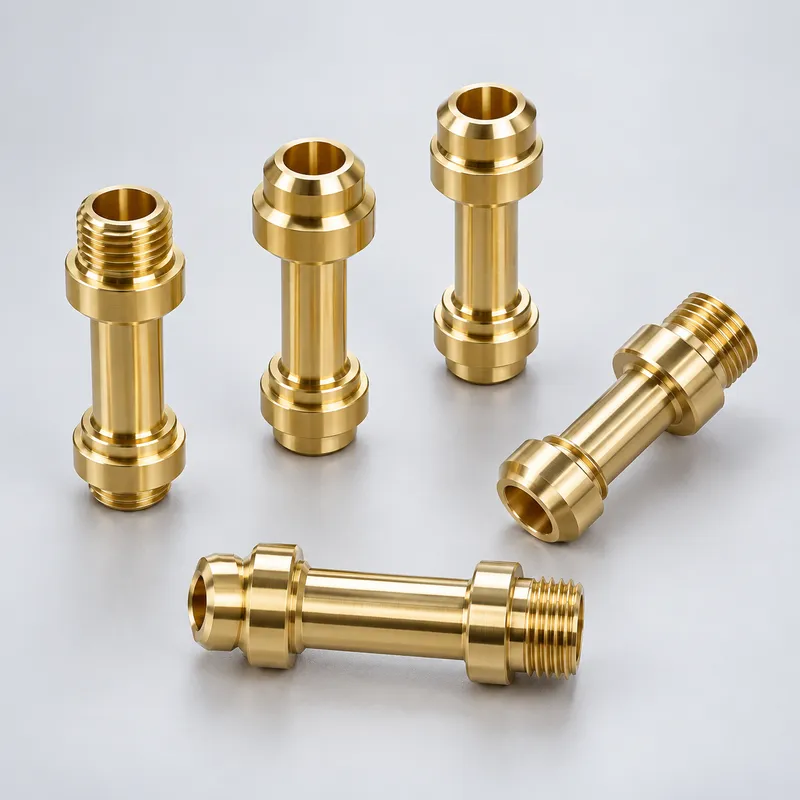
The component has a rotationally symmetrical body with a through bore, stepped diameters, locating shoulders, and an externally threaded end. CNC turning is well suited to this geometry because the main features share a common axis. At a quantity of 5,000 pieces, however, selecting the right process is only the starting point; the machining conditions must remain stable throughout the production run.
The shoulders establish the installed position, while the turned diameters and bore influence alignment with mating parts. The external thread must start cleanly and engage consistently without cross-threading or excessive resistance. We therefore reviewed the drawing around the component's assembly interfaces rather than treating it as a simple turned profile.
External Thread Control for Repeated Assembly
The external thread is one of the main functional features of this part. Before production, we verify the thread specification, usable thread length, relief or runout, lead-in chamfer, and any drawing notes related to fit. The chamfer helps the part enter its mating thread, while correctly planned runout prevents interference close to the shoulder.
During machining, the thread is monitored together with the critical diameters and shoulder locations. Insert wear, chip control, and cutting conditions can all affect thread form and finish over a long run. Depending on the drawing and customer requirements, verification may include thread gauges, dimensional measurement, visual inspection, or a mating-part check.
Keeping a 5,000-Piece Production Run Consistent
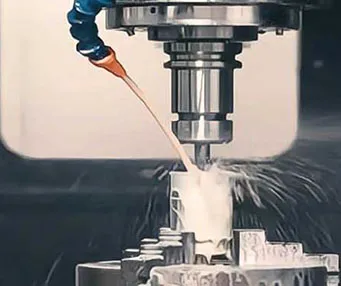
Production CNC turning requires more than running the same program for longer. A controlled plan is needed to identify drift before it affects a large number of parts. Our workflow for this type of order includes:
Reviewing the 2D drawing and 3D model before programming.
Identifying critical dimensions, thread callouts, and inspection methods.
Producing and approving a first-off part before releasing the batch.
Checking key features at planned intervals during machining.
Tracking tool condition and applying offsets when measurement data shows a trend.
Deburring and cleaning the components before final inspection.
Separating and packing the parts to reduce thread damage in transit.
The specified ±0.05 mm tolerance is practical for a controlled turning process, but it must be linked to the correct features and datum scheme. Inspection priorities are therefore based on assembly, location, and function, with other dimensions checked according to the approved inspection plan.
Why Brass Works Well for Electronic Hardware
Brass combines good machinability with useful electrical, corrosion, and assembly properties. It is commonly selected for threaded fittings, inserts, sleeves, terminals, connector bodies, and other electronic hardware. With appropriate tooling and cutting conditions, it can produce clean shoulders, controlled diameters, and well-defined threads at production volumes.
The brass grade should still be specified according to the product's functional and regulatory needs. Conductivity, plating compatibility, environmental exposure, and restricted-substance requirements may affect material selection. Including these details in the RFQ allows us to review raw material and documentation requirements before production.
Brass CNC Turning Services from Prototype to Production
YS Rapid supports custom turned parts from initial samples through repeat production. Our brass CNC turning services cover threaded fittings, sleeves, connector bodies, spacers, shafts, bushings, and precision inserts made to customer drawings. Aluminum, stainless steel, copper, and engineering plastics are also available for other turned-part projects.
The manufacturing route is selected according to part size, geometry, tolerances, and order volume. Conventional CNC lathes suit many rotational components, while Swiss-type or turn-mill equipment may be considered when a design includes small diameters, longer length-to-diameter ratios, or additional milled features.
For batch custom CNC turning, we can coordinate material sourcing, machining, deburring, dimensional inspection, specified finishing, and export packing. Before production, the project can be reviewed for manufacturability, tolerance priorities, thread verification, and handling risks. This gives purchasing teams and engineers a clearer basis for comparing quotations and approving the production plan.
Request a Quote for Custom Turned Parts
If you are sourcing custom brass turned parts, send us the 3D model, 2D drawing, annual or batch quantity, brass grade, finishing requirements, and inspection expectations. YS Rapid will review the drawing and provide a quotation for prototype validation or production CNC turning.
 EN
EN
 jp
jp  ko
ko  fr
fr  de
de  es
es  it
it  pt
pt  tr
tr  ar
ar  iw
iw