Specifications of Project Overview
Project Item | Details |
Application | Industrial cleaning robot |
Prototype component | Main plastic housing |
Material | ABS |
Process | CNC machining and controlled bonding |
Quantity | 5 sets |
Testing purpose | Fit checks and assembly verification |
Destination | United States |
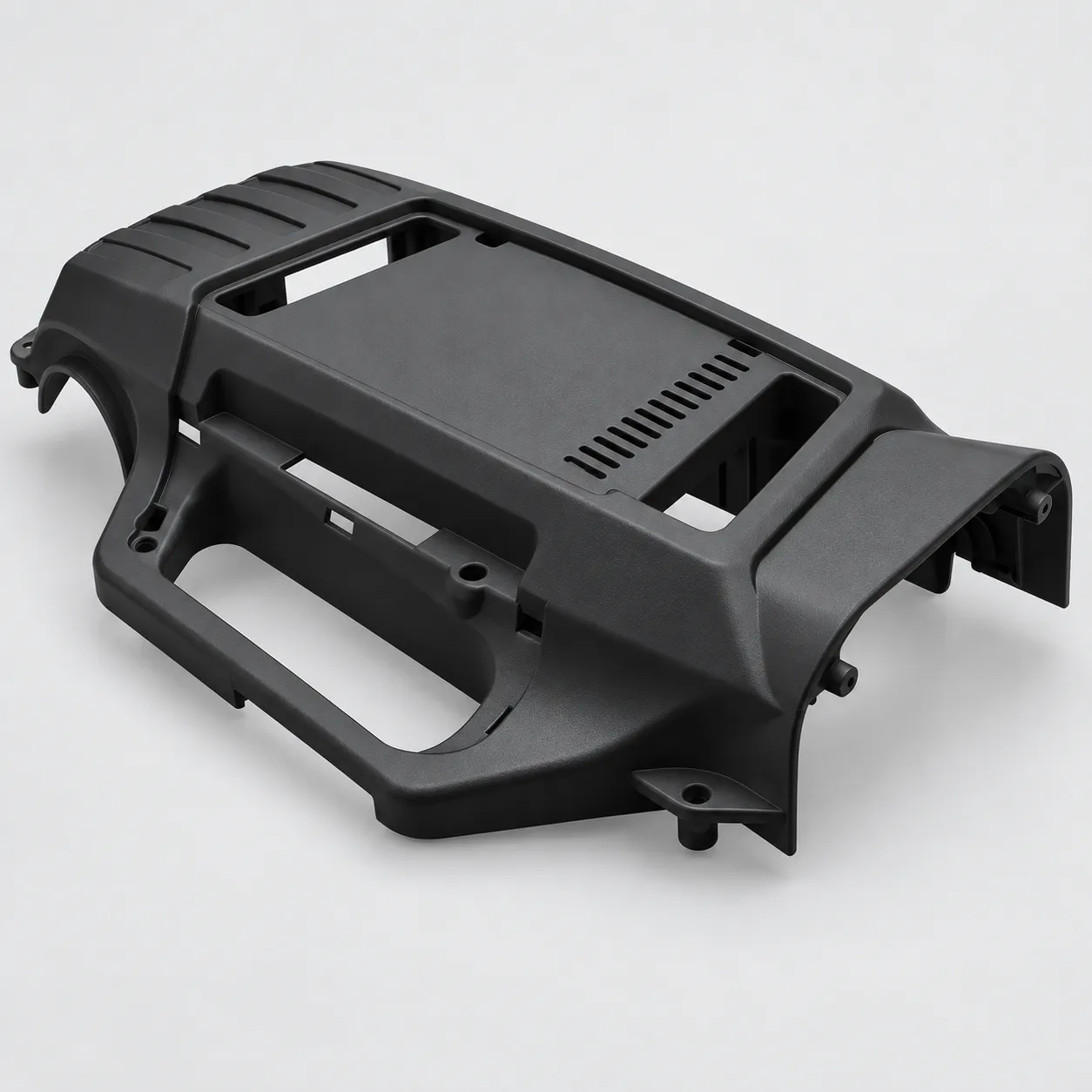
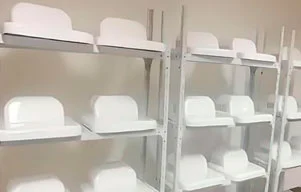
The housing featured a wide central panel, curved side sections, ventilation slots, recessed areas and multiple mounting points. Its overall dimensions and the positions of the openings had to remain stable so the customer could evaluate the internal layout of the robot.
Why CNC Machining Was Suitable for Five Prototypes
The project was still at the engineering verification stage. Only five sets were required, and the design could be modified after testing. Producing an injection mold at this point would have added cost and made future changes more difficult.
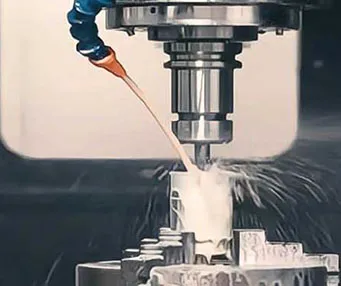
A CNC plastic prototype can be manufactured directly from 3D CAD data without permanent tooling. It is therefore well suited to low-volume builds used for assembly trials, clearance checks and early functional testing.
ABS was selected for its machinability, rigidity and impact resistance. It can also withstand repeated handling and fastening better than a fragile visual model. These properties made it suitable for housings that would be installed, removed and inspected several times during testing.
Solving Restricted Tool Access
Although the external form appeared relatively open, several internal surfaces could not be reached reliably if the housing was machined in one piece.
Deep recessed areas and partially enclosed features would have required unusually long cutting tools. This could increase tool vibration, reduce surface quality and make dimensional control less consistent. Some internal geometry was also blocked by surrounding walls.
Instead of forcing a one-piece machining strategy, we reviewed the model from a manufacturing perspective. The housing was separated into sections according to tool access, structural requirements and the intended assembly test.
The split locations were planned to:
· Keep critical mounting features within stable machined sections
· Avoid interference with internal component installation
· Provide enough contact area for bonding
· Reduce visible joints on the main exterior surfaces
· Preserve the overall profile and functional openings
No change was made without customer confirmation. The proposed construction method was approved before the parts entered production.
Controlling Alignment During Bonding
Splitting a housing makes complex geometry machinable, but it introduces another important requirement: the sections must be accurately repositioned during assembly.
If one section moves while the adhesive cures, mounting holes may become misaligned and the complete housing may no longer match the intended dimensions. For this reason, bonding was treated as a controlled assembly process rather than a cosmetic finishing step.
Before adhesive was applied, the machined sections were dry-fitted to check their matching edges, locating surfaces and joint gaps. The positions of the openings and mounting points were also reviewed.
During bonding, the components were held securely to maintain alignment. After curing, the completed housing was inspected as one unit. This helped confirm that the assembled prototype was suitable for the customer’s installation tests.
What the Customer Could Verify
These five sets were engineering prototypes, not simply appearance samples. They allowed the development team to work with physical housings before committing to tooling or a larger production quantity.
The customer could use them to evaluate:
· Installation of mechanical and electronic components
· Clearance around assemblies, cables and connectors
· Alignment of openings and mounting points
· Accessibility for screws and service operations
· Fit between the housing and the robot structure
· Overall dimensions and external form
· Potential design changes before the next build
Producing five sets also provided multiple samples for repeated assembly and internal review.
Plastic Prototype Service for Large Housings
A reliable plastic prototype service involves more than selecting a material and running a CNC program. Tool reach, machining orientation, wall thickness, joint placement and the final use of the prototype should all be considered before production.
For some large enclosures, machining several sections and bonding them together is more practical than attempting a complete one-piece part. However, the split plan must be based on the testing requirements. A housing used for visual presentation may require a different construction method from one intended for component installation.
YS Rapid provides support from drawing review and manufacturing planning through CNC machining, bonding and final inspection. We manufacture plastic prototypes in ABS, PC, PMMA, POM and other engineering materials for electronic equipment, robots and industrial devices.
CNC Plastic Prototypes for Assembly Testing
This industrial cleaning robot project demonstrates how a complex ABS housing can be produced in a small quantity without injection molding tooling. By identifying restricted machining areas early and agreeing on a controlled split-and-bond solution, we delivered five complete housings for assembly testing in the United States.
If you need a rapid prototype for a large plastic enclosure, send us your 3D model, 2D drawings, required quantity and testing purpose. Our team can review the geometry and recommend a practical CNC plastic prototype manufacturing plan.
 EN
EN
 jp
jp  ko
ko  fr
fr  de
de  es
es  it
it  pt
pt  tr
tr  ar
ar  iw
iw