Why CNC Machining Was Used for This Prototype Housing
At this stage, the customer needed physical enclosures for engineering verification, but the quantity was too low to justify building an injection mold.
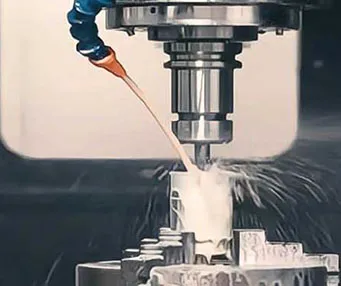
CNC machining allowed the 10 prototype sets to be produced directly from solid PC material without production tooling. The completed housings could be used to evaluate:
· Overall enclosure size and external proportions
· Internal clearance for electronic components
· Mounting and connection features
· Alignment between adjoining housing sections
· Assembly gaps around the enclosure
· Final color and surface appearance
For low-volume development projects, CNC plastic prototyping provides a practical route from CAD data to physical components that engineers can assemble, handle and review.
CNC Machining the PC Medical Housing
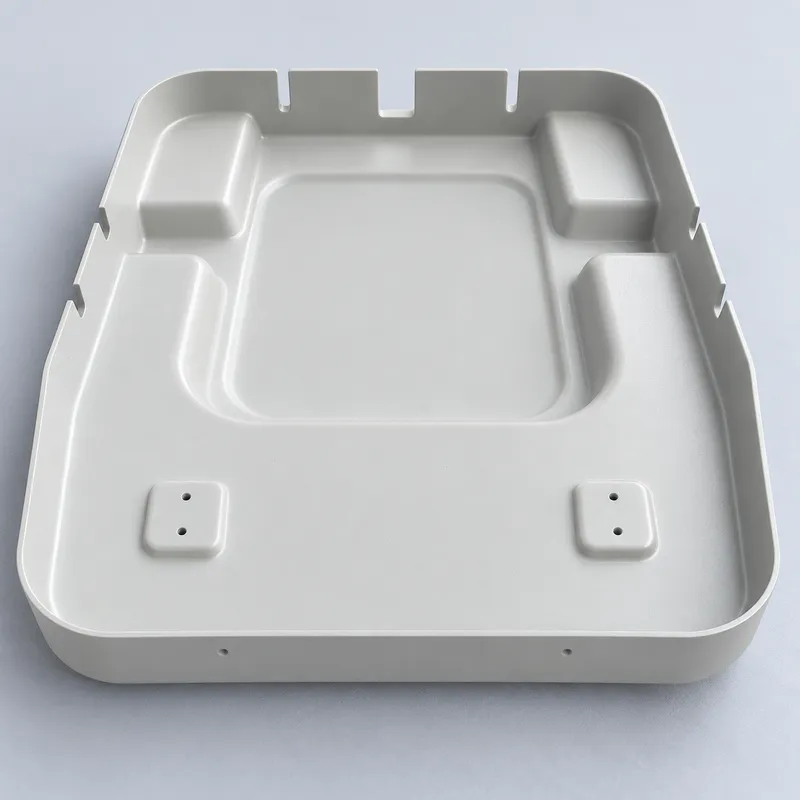
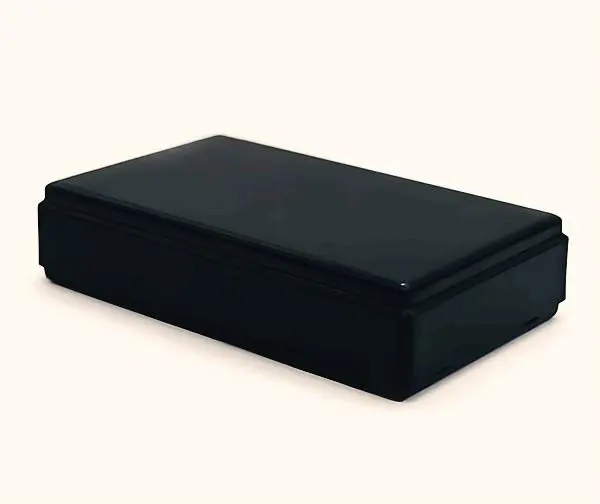
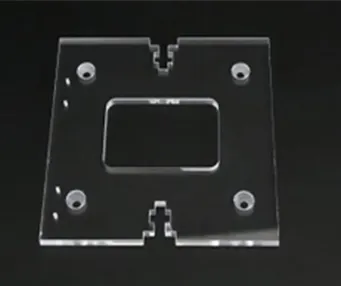
The housing shown in this project contains a large recessed area, raised internal sections, mounting pads and several edge openings. Producing these features required multiple machining setups rather than simple profile cutting.
Before production, our engineering team reviewed the drawings to identify the functional and cosmetic areas of the enclosure. The machining plan considered tool access, workholding, wall thickness and the surfaces that would connect with other components.
Each housing was CNC machined from solid PC stock. Cutting parameters were controlled to limit heat buildup and reduce the risk of edge damage or distortion in thinner areas. Particular attention was given to the mounting features and mating edges because these dimensions directly affected the final assembly.
Checking the Fit with Other Housing Parts
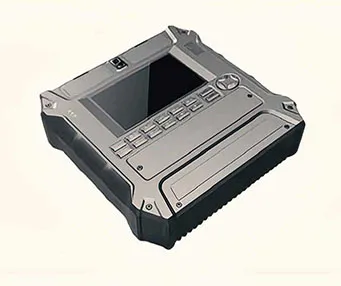
This PC component was one section of a larger medical instrument enclosure. It needed to match other housing parts rather than function as an individual display model.
After machining, we inspected the relevant dimensions and fitted the enclosure components together before painting. The fit check focused on several practical questions:
· Do the housing sections align correctly?
· Are the assembly gaps consistent?
· Is there any interference between adjoining parts?
· Are the mounting positions accessible?
· Can the internal components be installed as intended?
Performing this check before surface finishing allowed minor fit issues to be corrected without damaging the painted surfaces. It also reduced the risk of discovering an assembly problem after all 10 sets had been completed.
Fine Polishing and Custom Painting
CNC machining normally leaves visible tool marks on plastic surfaces. Since this housing formed part of the external enclosure of a medical instrument, the customer required a clean and consistent appearance.
The PC surfaces were progressively sanded and finely polished, with additional attention given to broad faces, curved transitions and recessed areas. The parts were then cleaned and painted according to the customer’s specified color.
During finishing, we checked for sanding lines, scratches, uneven coating and excessive paint buildup around mating edges. This helped maintain both the intended appearance and the fit between the housing components.
Completing 10 Prototype Sets in About Seven Days
The customer needed the prototype housings quickly so that assembly and product evaluation could continue without delaying the development schedule.
CNC machining, manual finishing, painting and fit verification were coordinated as one workflow. With the drawing review completed before production, all 10 sets were manufactured in approximately one week.
Actual lead time depends on part size, geometry, quantity and surface requirements. Reviewing the CAD files early allows us to identify machining risks and prepare a suitable production plan.
Plastic CNC Prototyping for Product Development
YS Rapid provides plastic CNC machining services for medical instruments, electronic devices, automation equipment and other product-development applications.
We manufacture prototype housings, covers, internal supports, mounting components and other custom plastic parts from engineering materials such as:
· PC
· ABS
· PMMA
· POM
· PA
· PEEK
· PEI
· PTFE
Additional services can include polishing, painting, silk-screen printing, laser marking and prototype assembly. When a project contains several housing sections or different materials, we can also check how the components fit together before delivery.
Turning a CAD Design into a Physical Product
A digital model can show the intended shape, but a physical prototype reveals how the enclosure behaves during assembly.
For this project, the customer received 10 finished PC housings that could be fitted with the other enclosure parts and used for further engineering evaluation. The prototypes helped the development team review the appearance, verify the assembly and identify possible improvements before production.
If you are developing a plastic enclosure, send us your 3D files, 2D drawings, required quantity and finishing specifications. Our engineering team can review the design and recommend a suitable plastic CNC prototype manufacturing plan.
 EN
EN
 jp
jp  ko
ko  fr
fr  de
de  es
es  it
it  pt
pt  tr
tr  ar
ar  iw
iw