One Hardware Package, Three Machining Routes
The geometry—not a fixed machine preference—determined how each drawing entered production.
Part characteristic | Selected route | Manufacturing reason |
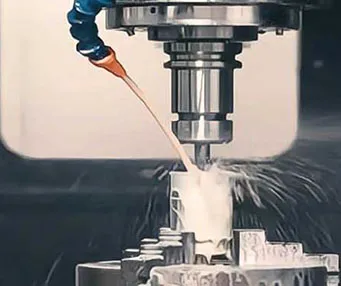
Round profiles, shoulders, grooves and standard threads | CNC turning | Efficient control of features sharing one centerline |
Small or slender parts with tight diameters | Swiss-type machining | Material support close to the cutting zone helps limit deflection |
Turned bodies with flats, cross holes or offset features | Turn-mill machining | Rotational and milled details can be completed with fewer relocations |
This division allowed several part families to run in parallel and avoided secondary setups on components that could be completed in one machining sequence.
Where ±0.005 mm Matters
The ±0.005 mm requirement applied to specific functional dimensions, not to every surface on every component. These dimensions could influence location, clearance, concentricity or the fit between the hardware and the surrounding assembly.
The 2D tolerances were reviewed with the 3D models, and inspection points were assigned by function. For the most precise features, initial pieces were checked and tool offsets were adjusted as measurements changed during the run.
For relevant components, control focused on:
Critical outside and inside diameters
Concentric relationships between bores and turned profiles
Shoulder positions and overall lengths
Thread size, usable depth and entry condition
Cross-hole or flat position relative to the turned centerline
This targeted method concentrates control on the dimensions that affect assembly.
Managing Brass and Stainless Steel Under One Schedule
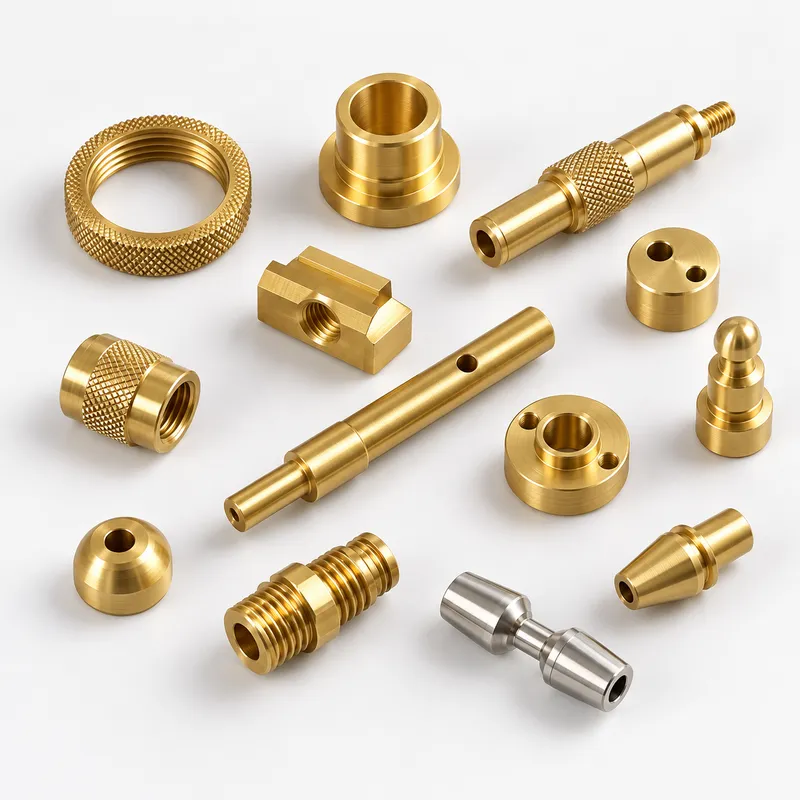
The mixed-material order needed separate cutting conditions and tooling decisions. Brass components allowed clean production of fine threads and knurled surfaces, but chips and burrs still had to be controlled around small openings. Stainless steel parts required closer attention to cutting heat, tool condition and work hardening, particularly on repeated tight-tolerance passes.
The materials were planned as separate production streams and brought together after machining and inspection, when quantities were checked against the hardware list.
From Individual Part Numbers to Complete Sets
For a multi-part order, the usable output is limited by whichever component finishes last. Producing 1,000 pieces of most items would not help if one small shaft or threaded insert were short.
YS Rapid tracked production by drawing number and set requirement. The workflow covered material preparation, machining, deburring, dimensional checks and quantity verification. Visually similar items were kept separated and identified before packing. Where mating relationships were defined, related features could be checked together rather than relying only on isolated measurements.
Set-based planning delivered a complete hardware package and reduced sorting after arrival.
Two-Week Production Without Moving Inspection to the End
The delivery target depended on parallel machining and early feedback. First-off results were reviewed before each batch continued, while critical dimensions were monitored in time to correct an offset or replace a worn tool. Inspection remained part of production rather than an activity left until all sets were finished.
By balancing the work across the appropriate equipment and coordinating completion by set, YS Rapid finished the brass and stainless steel hardware within the requested two weeks.
Custom CNC Turning Services for Prototype and Small-Batch Builds
YS Rapid supports drawing-based custom CNC turning services for medical equipment, diagnostic instruments and other precision assemblies. Projects can begin with a few prototypes and continue into small-batch CNC turned parts without separating turning, Swiss-type work and turn-mill components among multiple suppliers.
Support can include DFM review, process planning, threading, knurling, deburring, dimensional inspection and coordination of multi-part packages. We manufacture to customer drawings and acceptance requirements; regulatory or application-specific validation remains customer-defined.
If your assembly contains several custom turned components, send the 3D models, dimensioned 2D drawings, material specifications, quantities and identified critical features. YS Rapid can review the complete part family and prepare a practical plan for prototype or low-volume production.
 EN
EN
 jp
jp  ko
ko  fr
fr  de
de  es
es  it
it  pt
pt  tr
tr  ar
ar  iw
iw