CNC Turning for the Predominantly Round Components
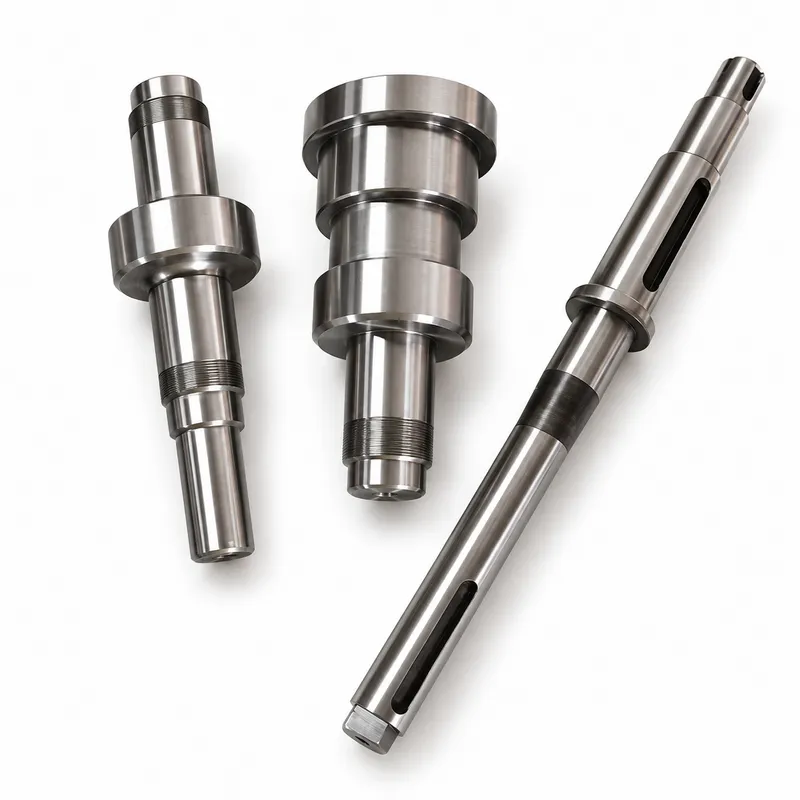
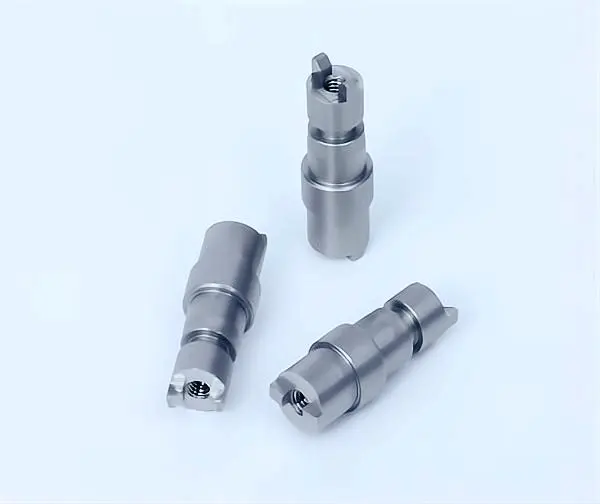
CNC turning is the direct process for parts built around a central axis. For the shorter parts in this set, the sequence can cover facing, rough and finish turning, grooving, shoulder finishing, chamfering, and end details.
Producing related diameters in a controlled setup helps maintain their concentric relationship and limits handling between operations. Tooling and cutting parameters are planned for 304 stainless steel, which can work-harden under unstable cutting conditions.
For batch production, the goal is not merely to make the first piece correctly. The turning process must remain stable throughout 1,000 sets. Dimensions that influence fit are checked at defined intervals, and tool offsets are corrected before gradual wear pushes the process outside the drawing limits.
Turn-Mill Machining for Slotted Shafts
The longer component cannot be completed by conventional turning alone. Its cylindrical surfaces are turned, but the long side openings require a milling operation at controlled axial and angular positions.
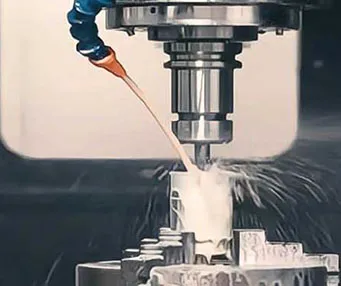
Turn-mill machining combines these operations on one machine. The main diameters, shoulders, and faces first establish the shaft axis. Driven tools then machine the slots in relation to that axis and the specified reference surfaces. This avoids transferring a partly finished shaft to a separately aligned milling fixture and reduces the number of times the part must be clamped.
The main benefit is better control of the relationship between turned and milled geometry. Slot position, width, depth, end shape, and edge condition may affect how the shaft connects with another component, so they are inspected as functional features.
How We Choose Between CNC Turning and Turn-Mill Machining
Machine selection depends on the drawing. A stepped shaft with grooves and threads may remain a CNC turning job, while one with flats, cross holes, keyways, or side slots may need turn-mill production.
Before quoting, we review the 2D drawing together with the 3D model. We identify which features share an axis, which dimensions are measured from a shoulder or end face, and whether any milled detail must maintain a defined angular relationship. This review helps us avoid two common cost problems: using an unnecessarily complex process or underestimating the setups needed to hold the required feature relationships.
The quotation reflects the material, geometry, tolerances, inspection scope, quantity, and delivery requirement. Drawing questions that could change the machining route are resolved before production.
Batch Production of Complete Sets
This order contained several part numbers, but the customer needed complete sets. Production planning therefore covered both machining efficiency and quantity balance.
The CNC-turned parts and turn-milled shafts have different cycle times. Their schedules were coordinated, and accepted quantities, replacements, and inspection holds were tracked by part number before shipment.
Critical diameters and axial dimensions can be checked with micrometers, calipers, and height gauges. Slots and profiles can be verified with optical measuring equipment where appropriate. The exact inspection method follows the tolerances and datum references on the customer’s drawing. When mating parts or suitable samples are available, agreed fit checks can also be included.
After machining, the parts are deburred without damaging functional edges or finished diameters. They are cleaned, visually checked, identified, and protected to reduce metal-to-metal contact during transport. The packing quantity is reconciled against the number of complete sets required.
Custom CNC Lathe Parts from YS Rapid
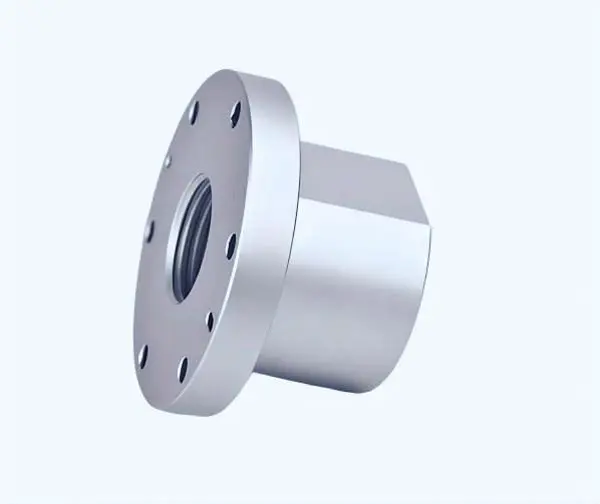
YS Rapid provides custom CNC turning services for shafts, pins, sleeves, bushings, flanged components, threaded parts, and other cylindrical hardware made to customer drawings. When a turned component also contains slots, flats, cross holes, or off-axis features, we can integrate turn-mill machining into the same project.
This flexible process planning is useful for machinery assemblies that contain several related components. Customers receive the appropriate machining route for each part, coordinated inspection, and one point of responsibility for the finished order.
Request a Quote for Custom Turned Parts
Send us your STEP files, 2D drawings, material grade, required quantity, critical tolerances, surface requirements, and delivery target. If several parts form one set, include their assembly relationships and required packing quantities.
We will review which components are suitable for CNC turning, which require turn-mill machining, and how the complete order can be produced and inspected efficiently.
 EN
EN
 jp
jp  ko
ko  fr
fr  de
de  es
es  it
it  pt
pt  tr
tr  ar
ar  iw
iw